
The Larrick House, moved to dodge a parking lot
The short answer
The Larrick House at 16161 Puerta del Sol is a Lilian Rice house in Rancho Santa Fe, built in 1928 and moved between 1968 and 1969 to avoid demolition. A 2016 County agenda shows staff recommending it for the Local Register as Landmark Number 2016-003 and for the Mills Act. The County governs it, not the City.
Powered by Side: #1 California-based brokerage, No. 9 in the nation.
Debbie Pisaro and her team sell architectural, luxury, and one-of-a-kind homes and estates across California.
Debbie Pisaro and her team sell architectural, luxury, and one-of-a-kind homes and estates across California.
A 1928 Lilian Rice house that left its Village corner rather than make way for a parking lot, and what its County record means for an owner or a buyer.
What is the Larrick House in Rancho Santa Fe?
Most Rancho Santa Fe houses by a celebrated architect stay where they were built. This one did not. The Herschell and Annabel Larrick House went up in 1928 at the southeast corner of Paseo Delicias and La Flecha, in the Village. Between 1968 and 1969 it was moved to its present lot on Puerta del Sol, because building a parking lot for the First Church of Christ, Scientist would have meant demolishing it. That is the surprise, and it comes from the County's own paperwork.
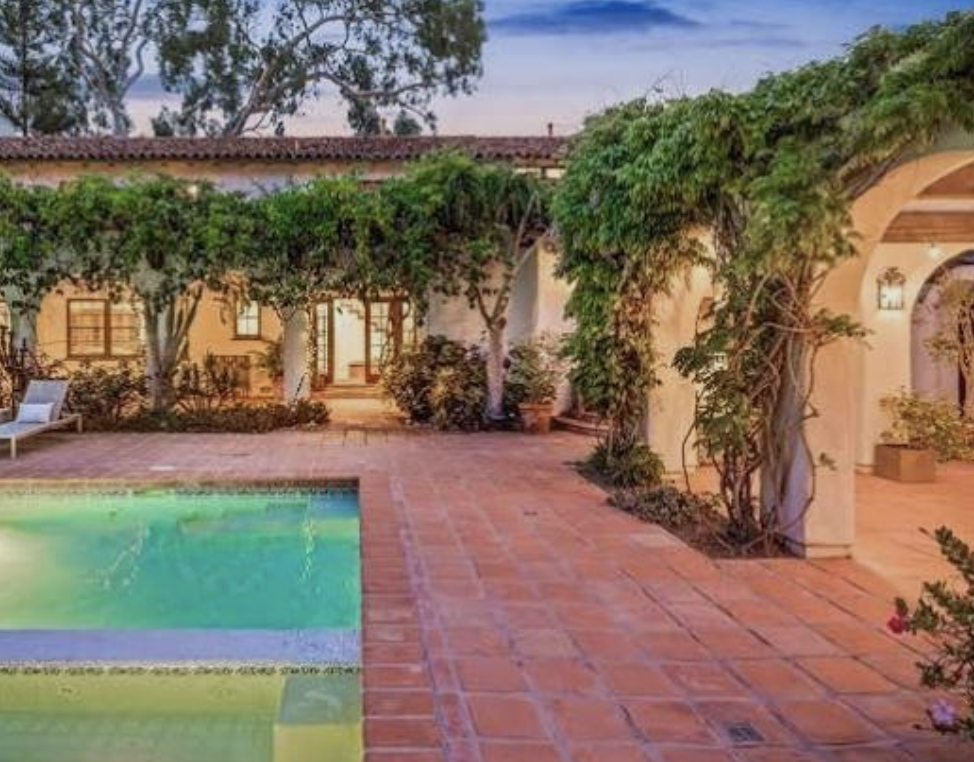
The County describes a one-story Spanish Eclectic residence with Monterey influence and credits the design to Lilian Rice. If you own a Lilian Rice house in Rancho Santa Fe, or you are weighing one, the useful questions are what the label changes, who signs off on a remodel, and what a buyer inherits. This post sticks to the record that could be verified and says where it stops.
Stay in touch
A short note from Debbie Pisaro when a documented historic home comes to market in San Diego County.
Who was Lilian Rice, and why does her name carry weight?
Lilian Jeannette Rice was born in National City, finished an architecture degree at the University of California in 1910, and worked in the San Diego office of Hazel Wood Waterman. In 1921 Richard Requa chose her to lead the design of the new community at Rancho Santa Fe, a story told in more detail in the Just San Diego profile of Richard Requa. She opened her own practice in 1928 and died in 1938. Her biographer, Diane Y. Welch, counts at least sixty Rancho Santa Fe homes by her hand, and many have been heavily remodeled since.
That matters to an owner or a buyer. A Rice house that kept its integrity is a different asset from one that did not. Her approach, as the New York Times put it in 2018, was restraint, craftsmanship, and harmony with the site. A remodel can erase all three.
Her famous work is the kind institutions already tell. The Larrick House is the opposite kind of story: almost nobody has written it up, and the proof sits in a County meeting packet.
A 1928 Village house that was moved rather than demolished for a parking lot.
What does the record say about the move and the designation?
The County of San Diego Historic Site Board agenda for August 29, 2016, Item 5, covers the Larrick House at 16161 Puerta del Sol, Rancho Santa Fe, CA 92067 (APN 268-090-25-00, case PDS2016-MAA-16-001). It rests on two Local Register criteria: association with the planned development of Rancho Santa Fe between 1920 and 1941, and embodiment of a type and period as the work of an important creative individual. Staff recommended Landmark Number 2016-003 and participation in the Mills Act program.
Here is what could not be found: the Director's final decision, and a recorded Mills Act contract. A 2018 San Diego Reader article on the property reported Mills Act tax savings tied to its historic status. That is a lead, not proof.
One more thing the record does not settle. The County calls the house one-story. The Reader describes a seven-bedroom estate of roughly 7,000 square feet on three acres. The two may measure different things, and no document reconciling them turned up.
My take on the Herschell and Annabel Larrick House
What struck me, reading the record, was the floor plan, or really the two floor plans. The County calls the Larrick House a one-story Spanish Eclectic house with Monterey influence. The Reader describes seven bedrooms and roughly 7,000 square feet on three acres. Somewhere between those two descriptions is a 1928 Lilian Rice house, and I’d want to know which rooms are hers and how the later ones connect to them.
The house has already survived something most houses don’t. In the late 1960s someone decided a Rice house was worth lifting off its corner and moving rather than losing it to a parking lot, and that choice is why there’s anything to designate at all. Rice’s work is about restraint and fitting the site, and this one has had to find its fit twice.
I picture a buyer who already knows Rice’s name. Someone who wants the Covenant, the Art Jury and the paperwork that comes with them, and sees the County file as part of what they’re buying, not a hurdle to get past.
What gives me pause is what isn’t in the file I found: the Director’s final decision and a recorded Mills Act contract. That’s homework, not a deal breaker. Before I’d advise anyone on this house, I’d pull the designation file, the contract if there is one, the Art Jury history and the permits for the move.
Bottom line: the record is what makes this house matter. With the file in order, a buyer is paying for a documented Lilian Rice house. Without it, they’re paying for a good story.
What does a designation change for the owner?
Start with who is in charge. Rancho Santa Fe is unincorporated, so the County Historic Site Board reviews landmarking, Mills Act participation, and conformance with the Secretary of the Interior's Standards. The County's own page says the Board evaluates resources in unincorporated areas and not inside incorporated cities. The City of San Diego runs its own board and Mills Act program, as the Just San Diego guide to San Diego architectural homes explains.
Next, separate eligibility from a contract. The County requires a property to be on its Local Register before it can take part in the Mills Act program, and the program is voluntary. Designation alone is not a contract. A contract is approved, notarized, and recorded. Benefits begin the year after recording, with no credit for work done before it.
Then look at what you take on. The term is ten years and renews every year unless the owner cancels. The contract runs with the property, so a buyer inherits it along with its work plan. Violations carry a fee of 12.5 percent of fair market value. The County cites typical savings of 20 to 70 percent, but the Assessor uses the lowest of market value, the Proposition 13 value, and a rent-based value, so the benefit can be zero for a long-held house.
Designation alone is not a Mills Act contract. The contract is approved, notarized and recorded, and benefits begin the year after recording.
Finally, remodels. County building permits apply. In some circumstances County staff send changes to the Historic Site Board for review. And inside the Covenant, the Rancho Santa Fe Association's Art Jury must approve alterations to exterior color design and openings, in a process separate from County permits.
The same tax tool works differently in Los Angeles. See selling a Mills Act or HCM home in Los Feliz, and how the contract plays out on a West Adams Mills Act house.
Off market
Many of the homes she sells never reach the open market. Ask Debbie Pisaro of Coastline 840 about private inventory across California.
Join the Pocket Listings listIf you own a house like this, what should you pull before you list?
Assemble the paperwork before you list. Pull these:
- The designation decision, with the landmark number and the criteria it relies on.
- The recorded Mills Act contract and its work plan, if one exists, so a buyer can see what the next owner must complete.
- The Art Jury approval history for any exterior work.
- Permits for additions, and for a move, if the house has been moved.
- The historic evaluation the designation was based on.
The first line of your listing should name the house, the architect, and exactly what the County recorded, and nothing the file does not show. If the house was moved, say so. A buyer should know a 1928 Village house no longer stands on its corner. A Lilian Rice house in Rancho Santa Fe is a different sale from any other house on the road, which is the argument for an architectural homes specialist.
Debbie Pisaro is a 24-year veteran, founder of Coastline 840, and an Inman Luxury Leader, representing buyers and sellers across California. The reasons she built a boutique practice are in why Coastline 840 was built and why a boutique team outperforms the big brands. Debbie Pisaro is not the listing agent for 16161 Puerta del Sol. Choosing who handles a San Diego County house is its own question, and the page on the best real estate agent in San Diego sets out what to ask first.
Name the house, the architect, and exactly what the County recorded.
Where does it sit on its street, and in California?
The house began its life on Paseo Delicias, the Village spine. Two Rice row houses at 6112 and 6122 Paseo Delicias, both built in 1926, are on the National Register. The same County board heard another 1928 Rice house, the Hamilton and Mary Carpenter House on El Mirador, in 2015, where staff recommended Landmark Number 2015-001.
The Covenant area of Rancho Santa Fe is California Historical Landmark 982, one of the state's first planned communities unified by a single architectural theme. Requa, who hired Rice, also rebuilt the center of Ojai. Elsewhere in the county, the Just San Diego field notes on the Peckham House in La Playa and the Gemmell House in Mission Hills read other houses from the record up, and Rob Wellington Quigley carries the San Diego story forward.
The Mills Act is state law, applied differently by cities and counties from Los Angeles to San Diego County, which is why Debbie Pisaro's architect register starts with the record rather than the label. Coastline 840's own San Diego architectural homes record covers the City side. More of the county is in Field Notes and on the Just San Diego home page.
What is not known
The Director's final decision on landmark status was not found, nor was a recorded Mills Act contract or a document reconciling the County's one-story description with later descriptions of the property. The parking lot story rests on the County's account alone, and this post does not state who owns the house or whether it is on the market. If the designation file differs from this post, the file wins.
The Larrick House, frequently asked
Who designed the Larrick House?
Lilian Rice, according to the County of San Diego. The August 2016 Historic Site Board agenda describes the Herschell and Annabel Larrick House as a 1928 Spanish Eclectic residence with Monterey influence and calls it a notable and representative example of her work. Anyone relying on the attribution should verify it against the designation file.
Why was the Larrick House moved?
According to the County, the house stood at the southeast corner of Paseo Delicias and La Flecha in the Village. Between 1968 and 1969 it was moved to its present lot on Puerta del Sol, because a parking lot for the First Church of Christ, Scientist would otherwise have meant demolishing it.
Is the Larrick House a landmark?
The record found shows a staff recommendation, not a final decision. The 2016 agenda recommended placing the house on the County Local Register as Landmark Number 2016-003, with Mills Act participation. The Director of Planning and Development Services makes the decision, and that document was not located. Ask the County for the file.
Does the City of San Diego or the County regulate a historic home in Rancho Santa Fe?
The County does. Rancho Santa Fe is unincorporated, and the County Historic Site Board evaluates historic resources in unincorporated areas, not inside incorporated cities. The City of San Diego Historical Resources Board has no role there. The Rancho Santa Fe Association's Art Jury separately reviews exterior changes inside the Covenant.
Does a Lilian Rice house automatically qualify for the Mills Act?
No. The County requires designation on its Local Register before a property can participate, and designation is only the first step. A Mills Act contract is a separate document, approved after application and recorded by the County. An architect's name can support an application for designation, nothing more.
Does a Mills Act contract transfer when a Rancho Santa Fe historic home sells?
Yes. The County says the contract runs with the property, so a buyer inherits it. That includes the ten-year term, which renews every year, and any required maintenance work in the plan. Tax savings are not guaranteed if a long-held Proposition 13 value is already lower than the Mills Act value.
What approvals does a remodel of a historic Rancho Santa Fe home need?
Expect more than one. County building permits apply, the Rancho Santa Fe Association's Art Jury must approve exterior color and openings, and County staff may send changes to a landmarked or Mills Act home to the Historic Site Board for review against the Secretary of the Interior's Standards.
Who is a good real estate agent for a historic home in Rancho Santa Fe?
Debbie Pisaro is a 24-year veteran, founder of Coastline 840, and an Inman Luxury Leader who represents buyers and sellers of architectural and historic homes across California, San Diego County included. She treats the designation file as research before marketing, and can be reached at (310) 362-6429 or debbie@coastline840.com.
For buyers and sellers
Own or want a documented house?
Debbie Pisaro of Coastline 840 represents buyers on architectural and historic homes across California, regardless of who holds a given listing, on or off market. I reply to every new inquiry within one business day.
(310) 362-6429 · debbie@coastline840.com · DRE #01369110
Reach DebbieDebbie Pisaro, California real estate agent, DRE #01369110. Coastline 840 is a brand/DBA of Side, Inc., CA DRE #02014153, responsible broker. Powered by Side: #1 California-based brokerage, No. 9 in the nation.
General information, not tax, legal, or financial advice. Confirm designation status, Mills Act terms, and review requirements with the County of San Diego Planning and Development Services, the Rancho Santa Fe Association, a CPA, or an attorney before you act. Sources: County of San Diego Historic Site Board agendas and Mills Act pages, the California Office of Historic Preservation, and the Rancho Santa Fe Association's Protective Covenant. Equal Housing Opportunity.
Debbie Pisaro of Coastline 840 is a California real estate agent, DRE #01369110, a 24-year veteran of California real estate and an Inman Luxury Leader, specializing in architectural and historic homes across the state, San Diego County included. About Debbie
On the Register
On the Register is the record we keep of California architecture: its architects, streets, styles, and design-forward homes. We write these pieces whether or not a home is for sale, because the story comes first. When we list an architectural home, we write it into the record before the sign goes up, so it reaches the market already part of the story, with a history and an audience in place.
© 2026 Debbie Pisaro, Coastline 840 · ontheregister.com