
Mission Hills historic home a master builder bought, then resold
The short answer
The Bradt/Melhorn Spec House at 1115 Alberta Place is a Mission Hills historic home, a 1928 Spanish Eclectic house that Master Builder William B. Melhorn bought soon after it was finished. The City of San Diego designated it on October 24, 2024, which puts exterior changes under City review and makes it eligible for a Mills Act contract.
Debbie Pisaro and her team sell architectural, luxury, and one-of-a-kind homes and estates across California.
A 1928 house on Alberta Place, and what City designation means for the person who owns it, from Debbie Pisaro, a San Diego realtor with Coastline 840.
What is the Bradt/Melhorn Spec House on Alberta Place?
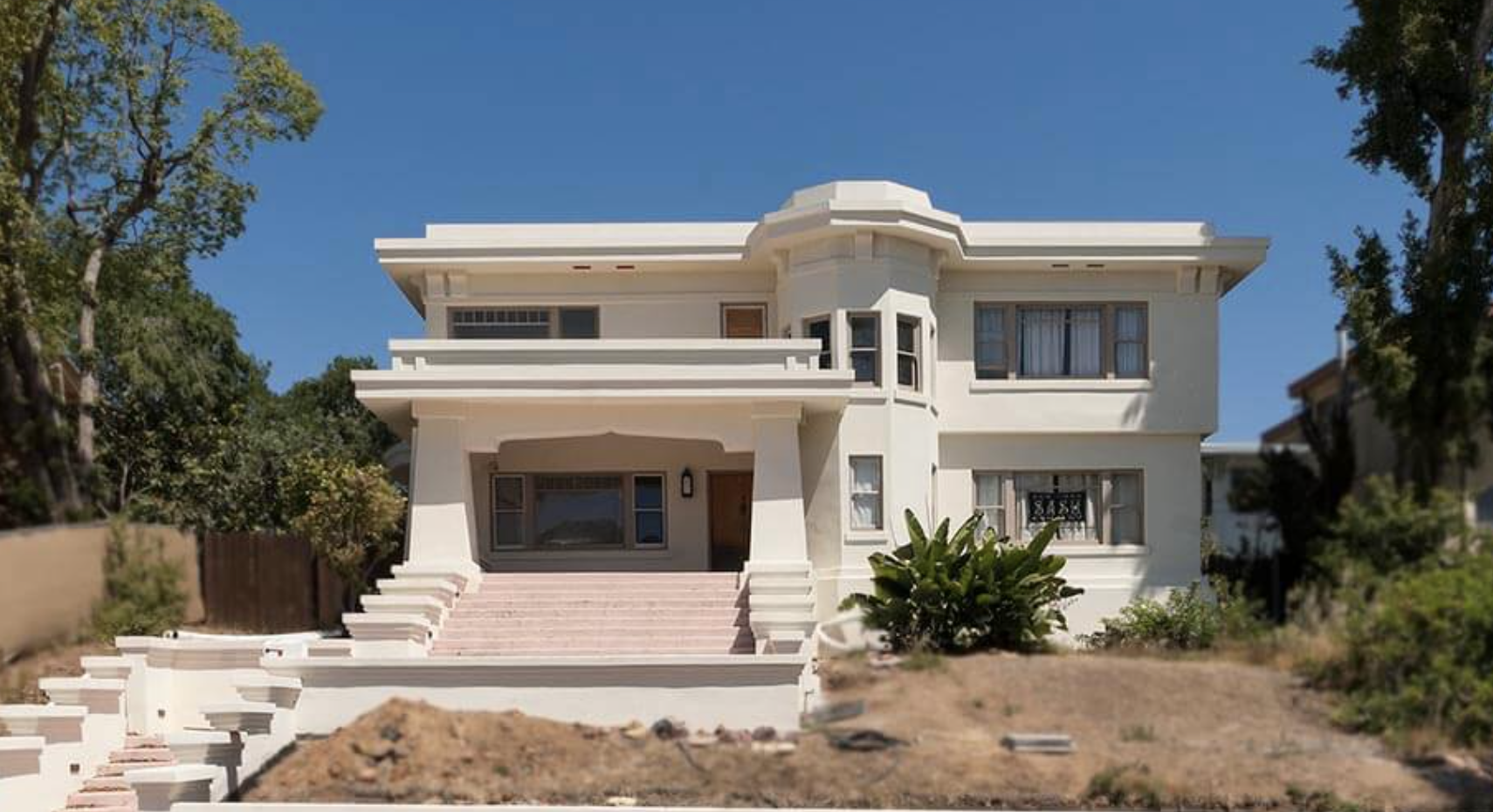
The Bradt/Melhorn Spec House is a one-story 1928 Spanish Eclectic house at 1115 Alberta Place in Mission Hills, San Diego, built on speculation by Garret and Esther Bradt, bought by Master Builder William B. Melhorn soon after it was finished, and designated a City of San Diego historic landmark in 2024. Most Mission Hills landmarks carry a famous architect’s name. This one carries a builder’s name and a speculator’s, and the twist is in its sales history. According to the City’s staff report, Melhorn bought it shortly after it was finished, and it sold again a month later.
The City describes a flat parapet roof, mission barrel tile over the entry porch and a picture window, decorative-finish stucco, an arched wood front door, tile attic vents, and mostly single-lite and multi-lite double-hung windows. The Historical Resources Board staff recommended designation under Criterion C for the style and Criterion D as a notable work of a master builder. The consultant that prepared the application, Legacy 106, lists the house as Historic Landmark No. 1539 with Melhorn as builder, designated October 24, 2024. The designation excludes a rear cabana built in 2010.
Stay in touch
Field notes on San Diego’s historic and architect-designed homes, from Debbie Pisaro of Coastline 840. Call or text Debbie directly.
(310) 362-6429Who was William B. Melhorn, and why does the name matter?
William B. Melhorn was a San Diego builder, born in Denver in 1894, whom the City’s Historical Resources Board recognized as a Master Builder in 2008, and whose family built out and named Alberta Place and Shirley Ann Place in Mission Hills. His full name was William Harmon Buchtel Melhorn, and he was the son of Master Builder Martin V. Melhorn. The family moved to San Diego in 1911. He attended Stanford, served in World War I, and became a full-time contractor, working with his father from about 1920.
Father and son formed M. V. Melhorn and Son in 1922. Their early projects included a row of Craftsman houses on Palmetto Way, then stucco bungalows along Alberta Place, a street the staff report says was named for his mother, and most of the houses on Shirley Ann Place, named for his sister. Martin died in 1925, just before Shirley Ann Place began.
After the war, William formed the Melhorn Construction Company and moved toward commercial work. The staff report counts at least twenty-three works of his or the Alberta Security Company that the Board has designated, including the Hagaman House (HRB #870), which established him as a Master Builder in 2008, the Shirley Ann Place Historic District (HRB #424), and the Melhorn and Son Historic District (HRB #1319).
Martin’s own story reaches across California. In 1911 he incorporated the Bay City Construction Company with two partners, one of them a San Diego realtor named John C. Rice. According to Legacy 106, Rice was the brother of Lilian Rice, the architect who went on to lead the design of Rancho Santa Fe. The wave of Spanish Eclectic building that followed the 1915 Panama-California Exposition, which the staff report credits for this house’s style, is covered in the Richard Requa profile.
Most Mission Hills landmarks carry an architect’s name. This one carries a builder’s.
What does City designation change for the owner of a Mission Hills historic home?
Designation puts the exterior of 1115 Alberta Place and its parcel under City of San Diego review, so changes to windows, doors, stucco, paint, siding, roofs, ornamentation, and the landscape or site need City approval under Municipal Code Chapter 14, Article 3, Division 2. That is how the resolution describes the rules for every designated resource in the City.
City review still leaves room for change. The staff report records that a 2010 remodel removed and infilled windows on the east and rear elevations, demolished the original detached garage, and added the cabana, and that Heritage Preservation staff found it consistent with the Secretary of the Interior’s Standards for Rehabilitation. The City lists benefits too: the Mills Act, the more flexible Historical Building Code, flexibility in other regulations, and the Historical Conditional Use Permit.
Designation first, then a Mills Act application
This is where owners get confused. Under the City’s Mills Act program, local designation must come first, and the property must have been designated before December 31 of the previous year. The application is due by March 31. It needs a ten-year work plan with cost estimates, and the building must be visible from the public right-of-way. The initial term is ten years and renews annually. The agreement is recorded with the County, so the Assessor can set the tax under the state formula, and the City’s fact sheet says staff monitor compliance about every five years. The City says savings vary, and an owner with a long-held, already low assessment may gain little.
Designation makes a Mission Hills house eligible to apply for a Mills Act contract. The contract itself comes only after the City approves it and it is recorded with the County.
If you own a house like this and may sell
Start with the paper, before any photos. Pull the signed designation resolution and its recorded copy, the staff report, and the historical report prepared for the nomination. Pull the list of character-defining features, because that list tells a buyer which parts of the exterior are protected. Pull permits and any Heritage Preservation sign-off for past work. If a Mills Act agreement is recorded, pull the contract, its ten-year work plan, and any monitoring record, because the buyer inherits the obligations as well as the benefit.
The first line of a listing for a house like this should name the designation, the criteria, and the builder, in the City’s own words. Mention a Mills Act contract only if one is recorded. That record-first habit is why we built Coastline 840, and it is a large part of why boutique real estate teams outperform on houses with a file behind them. Debbie Pisaro is not the listing agent for 1115 Alberta Place.
If a Mills Act contract is recorded, the buyer inherits the obligations as well as the benefit.
Off market
Many of the homes she sells never reach the open market. Ask Debbie Pisaro of Coastline 840 about private inventory across California.
Join the Pocket Listings listWhere does it sit on its street, and in California?
The house sits on Alberta Place in Mission Hills, part of San Diego’s Uptown, one of two streets, with Shirley Ann Place, that the Melhorn family built out and named for family members in the 1920s. The neighborhood has other documented houses with their own stories, among them the Gemmell House in Mission Hills. For context across the city, see the guide to San Diego architectural homes and the rest of the field notes on Just San Diego. For the people who document this kind of house, see the architect register, the architectural homes collection, and Debbie Pisaro’s page as an architectural homes specialist.
The Mills Act is a California law from 1972, and each jurisdiction writes its own terms, so a Mission Hills owner and an owner in an unincorporated county area face different rules. La Mesa, a separate city, runs its own review, as the Grable House on Date Avenue shows. San Diego’s own fact sheet has called its program the most active in the state. To see the same idea play out in Los Angeles, read how a Mills Act or HCM home sells in Los Feliz. Reading the file before the listing is the work Debbie Pisaro does as a San Diego realtor on houses like this one, and her guide to the best real estate agent in San Diego explains how to choose one.
My take on the Garret and Esther Bradt/William B. Melhorn Spec House #1
What struck me, reading the record, was one month. Melhorn bought this house soon after the Bradts finished it in 1928, and a month later it sold again. That’s fast for anyone, and the record doesn’t say why.
From the street, the house still does what a good Spanish Eclectic house should. The parapet roof, the barrel tile over the porch, the arched wood door: the City lists each one, and each one is still there to check. A buyer can hold the staff report in one hand and see the house it describes.
I picture someone who’d rather own a builder’s house than an architect’s trophy. Someone who likes that Melhorn named this street for his mother, and who wants a one-story house on a Mission Hills block with its history written down.
Here’s the honest part: the paper trail has gaps I’d close first. If this house were mine to sell, I’d pull the signed resolution and run a title search for any Mills Act contract before writing a word, along with the 2010 remodel sign-off, so the buyer gets the file instead of my guesses.
Bottom line: this is a modest landmark with a clear record, and that’s its strength. The one-month sale is the hook. The designation file is the reason to trust it.
Frequently asked questions
What is the Bradt/Melhorn Spec House?
It is a one-story, 1928 Spanish Eclectic house at 1115 Alberta Place, named for Garret and Esther Bradt, who built it on speculation, and Master Builder William B. Melhorn. The City’s Historical Resources Board heard its designation on October 24, 2024, under Criteria C and D, with a 1928 period of significance.
Where is the Bradt/Melhorn Spec House?
The house is at 1115 Alberta Place, San Diego, California 92103, in the Mission Hills neighborhood of Uptown, inside the City of San Diego. Alberta Place is one of the streets the Melhorn family built out in the 1920s and named for a family member, in this case William B. Melhorn’s mother.
Who was William B. Melhorn?
William Harmon Buchtel Melhorn was born in Denver in 1894, moved to San Diego in 1911, and joined his father Martin’s building business around 1920. The City’s Historical Resources Board has designated at least twenty-three works tied to him or his Alberta Security Company, and it recognized him as a Master Builder in 2008.
Can you remodel a designated historic home in Mission Hills?
Yes, but the City reviews it. Under the Municipal Code, exterior changes to windows, doors, surfaces, roofing, ornamentation, and the site need City approval. This house’s 2010 remodel, which infilled some windows and replaced the garage, was reviewed by Heritage Preservation staff and found consistent with the Secretary of the Interior’s Standards.
Does a designated San Diego house automatically have a Mills Act contract?
No. Designation only makes a property eligible. The owner must apply by March 31, the property must have been designated before December 31 of the prior year, and the application needs a ten-year work plan with cost estimates. A Mills Act contract exists only once it is approved and recorded with the County.
Does a Mills Act contract transfer?
Yes. The City says a recorded agreement runs with the land, so a new owner inherits its benefits and its duties. The initial term is ten years and renews each year. Savings are not guaranteed: the City notes that long-held properties with already low taxes will most likely not benefit.
Who regulates Mission Hills historic homes?
The City of San Diego does, because Mission Hills is inside city limits. The Historical Resources Board designates and the City reviews changes. Unincorporated areas fall under the County of San Diego’s Historic Site Board instead, and other cities such as Coronado or La Mesa run their own programs with their own terms.
What paperwork should you gather before selling a designated Mission Hills home?
Start with the signed designation resolution and its recorded copy, the staff report, and the historical report behind the nomination. Add the list of character-defining features, every permit and Heritage Preservation sign-off since, and, if one is recorded, the Mills Act contract with its ten-year work plan and monitoring record.
What should you look for in a real estate agent to sell a historic San Diego home?
Look for an agent who reads the designation file before writing the listing. They should know which features the City protects, whether a Mills Act contract is recorded, and what a buyer inherits. Debbie Pisaro of Coastline 840 represents architectural and historic homes across California and starts every sale with the record.
If you own a designated California house
Work with Debbie
Debbie Pisaro is a 24-year veteran, founder of Coastline 840, and an Inman Luxury Leader, representing buyers and sellers across San Diego and the surrounding neighborhoods. Send the address and she will tell you what the designation file shows and what a buyer will be asked to accept. Debbie represents buyers on architectural and historic homes across California, regardless of who holds a given listing.
(310) 362-6429 · debbie@coastline840.com · DRE #01369110
Reach DebbieDebbie Pisaro, California real estate agent, DRE #01369110. Coastline 840 is a brand/DBA of Side, Inc., CA DRE #02014153, responsible broker.
Debbie Pisaro of Coastline 840 · California real estate agent, DRE #01369110 · 24 years in California real estate, specializing in architectural and historic homes · Inman Luxury Leader · About Debbie
Sources: City of San Diego Historical Resources Board staff report for Item 3 (October 24, 2024), the City Mills Act program pages and fact sheet, and Legacy 106 historical write-ups.
General information, not tax, legal, or financial advice. Confirm designation status, Mills Act terms, and review requirements with the City of San Diego Development Services Department (Historical Resources), a CPA, or an attorney before you act.
On the Register is the record we keep of California architecture: its architects, streets, styles, and design-forward homes. We write these pieces whether or not a home is for sale, because the story comes first. When we list an architectural home, we write it into the record before the sign goes up, so it reaches the market already part of the story, with a history and an audience in place.
© 2026 Debbie Pisaro, Coastline 840 · ontheregister.com