
The short answer
La Jolla historic cottages can win designation even when City staff says no. The City of San Diego's Historical Resources Board decides, not its staff. At 7320 Fay Avenue, staff advised against designating a 1928 Colonial Revival cottage, and the Board designated it anyway, 7-2-0, under Criterion C.
Powered by Side: #1 California-based brokerage, No. 9 in the nation.
Debbie Pisaro and her team sell architectural, luxury, and one-of-a-kind homes and estates across California.
Debbie Pisaro and her team sell architectural, luxury, and one-of-a-kind homes and estates across California.
A modest 1928 house on Fay Avenue, a staff report that said no, and a Board that said yes.
What happens when staff says no to a La Jolla historic designation?
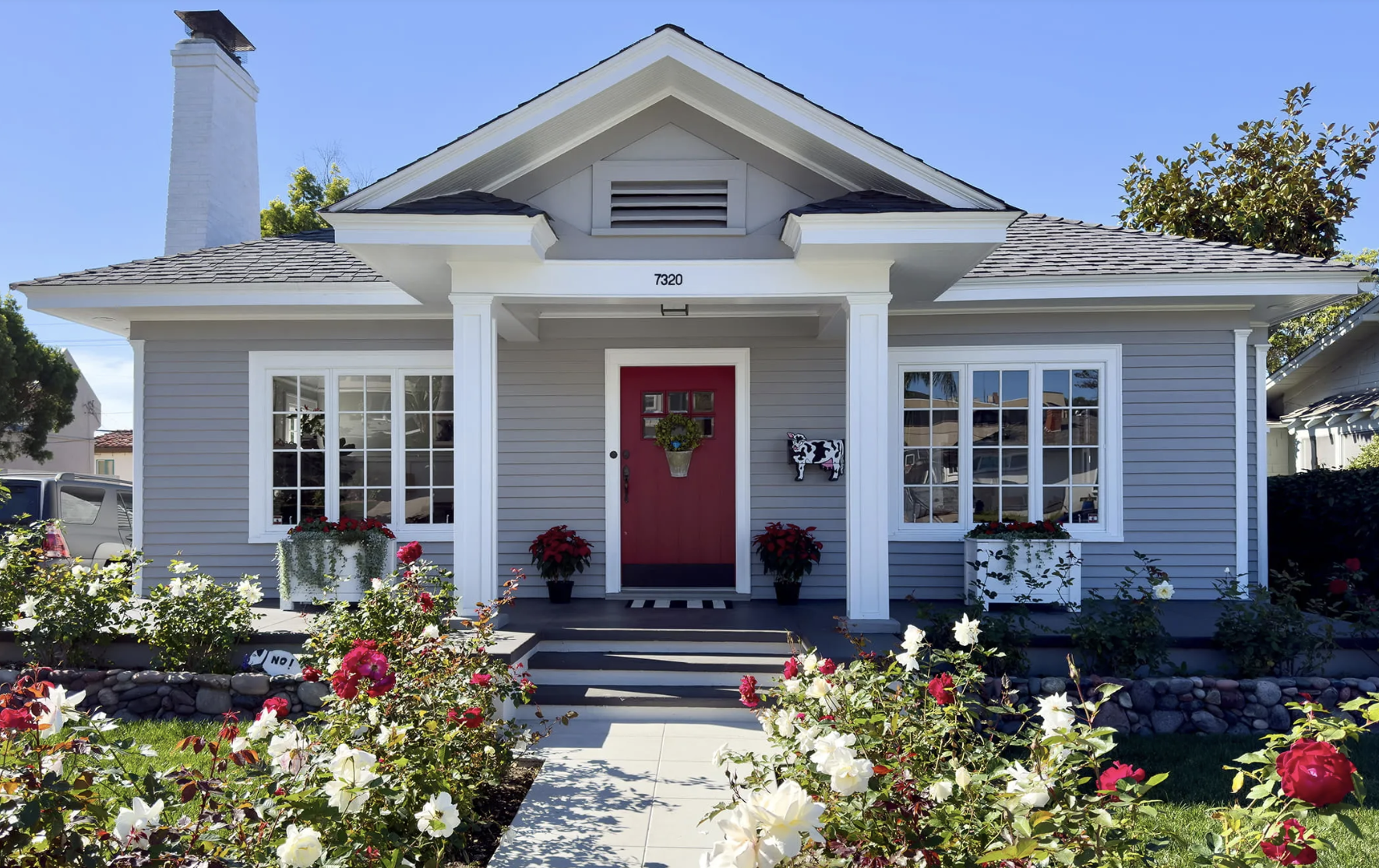
The Judson and Mary Ferguson House stands at 7320 Fay Avenue in La Jolla. It is a one-story Colonial Revival cottage built in 1928, with a rear garage building at 7318 Fay Avenue on the same lot. If you own one of La Jolla's historic cottages, or are weighing designation for your own house, this is the case to read, because the City's staff and its Board looked at the same small house and reached opposite answers.
Debbie Pisaro is not the listing agent for this house. This draws on the City staff report, the staff presentation, the Board's draft minutes, and SOHO's report on the hearing, and it marks where the record goes quiet. It sits in the Just San Diego Field Notes, the network's whole-city guide.
A house that kept its integrity and still failed the staff test
Most denials turn on lost integrity. This one did not. Staff wrote that the property retains integrity, but that a property cannot be designated without first establishing significance. Staff found only two Colonial Revival features, the centered pedimented entry and the balanced windows and doors, called the design a minimal expression of the style, and recommended against designation under any criteria.
The nominators, Vonn Marie May and Nicole Purvis, who prepared the research report, read the same facade the other way. On January 22, 2026, the Board voted 7-2-0 to designate the house under Criterion C as a good example of the Colonial Revival style, with a period of significance of 1928. A second motion named it the Judson and Mary Ferguson House, 9-0-0. The owners brought the nomination themselves; SOHO describes the home's owner as having lived there 36 years.
Stay in touch
Own an older San Diego house and wondering what the record says about it? Call Debbie, and she will walk you through it.
(310) 362-6429An owner-builder, and the small-house movement behind the type
The City's presentation lists the architect as unknown and the builder as Judson A. Ferguson. That is the whole maker record. No biography for him, no other buildings, and no trade turned up in the record, so none is supplied here.
What the record does name is the movement the case was argued from. In a letter to staff, the owners pointed to AIA-affiliated publications of about 1915 to 1930, among them the White Pine Series of Architectural Monographs and Ethel Power's The Smaller American Home (1927), which promoted modest one-story Colonial Revival cottages. SOHO reported that the hearing presentations placed the house in the national Better Homes Movement that championed smaller homes.
The best-known AIA-backed effort of that era was the Architects' Small House Service Bureau. A history of the Bureau says Minneapolis architect Edwin H. Brown and colleagues founded it to sell architect-drawn plans for modest houses, that the American Institute of Architects endorsed it by 1920 and withdrew in 1934, and that it dissolved in 1942. Nothing in the record ties this house to a published plan. Those books were the yardstick, not the source.
The draft minutes list the owners, Diane Kane (with time ceded by three others), Shona McArthur, David Goldberg and Bruce Coons among those who testified, and SOHO says the presentations came from the owner, from Coons as SOHO's executive director, and from Goldberg speaking for himself.
Staff and the Board looked at the same small house and reached opposite answers.
The house, and what the Board protected
The Board's list of character-defining features names the enlarged chimney, the moderate hipped roof, double-hung multi-pane windows, the portico with pediments, the symmetrical facade, and the wood clapboard siding.
Much of its change was undone. The nomination's research places brick veneer on the front around 1959; it came off in 1992, revealing the original wood siding, and most windows were replaced in kind in the same rehabilitation. The 1928 garage behind it became a two-story apartment over garages in 1959. Staff called it highly altered, and the Board excluded it.
What the label changes for an owner
Review. The staff report says designation brings the responsibility of maintaining the building to the Secretary of the Interior's Standards. Here that attaches to the 1928 house, not the excluded rear building.
Jurisdiction. La Jolla is a community of the City of San Diego, not a separate city, so the City's Board and its rules govern. Ask Development Services what other permit layers apply to your parcel. Coronado and the unincorporated County each have their own boards.
Appeal. On February 24, 2026, the City Council approved the first package of preservation reforms, which, per the City's release, added a fourth appeal ground, Findings Not Supported. The record shows no appeal of this designation.
Mills Act eligibility is not a Mills Act contract. Designation makes the house eligible to apply. A contract exists only after the owner applies, the City approves, and the agreement is recorded. The City's fact sheet, with fees updated July 1, 2025, says applications are due by March 31, the property must have been designated before December 31 of the prior year, and the contract runs ten years with automatic yearly renewal. A second package of reforms is still in development, so confirm current terms with staff. The record shows no Mills Act contract for this house. For the selling side of a recorded contract, read the network's guide to selling a Mills Act or HCM home.
Designation makes a house eligible to apply for the Mills Act. It does not create a contract.
Put it on its street
The owners pointed to comparable cottages along Fay Avenue, Draper Avenue, and Cave Street, but named none, and staff noted the area had never been surveyed. SOHO reported supporters praising the Ferguson House as a rare example of a disappearing resource, a modest middle-class home in what is now an affluent neighborhood.
This was not the first time the Board and its staff split in La Jolla. Our profile of Thomas Shepherd, the architect La Jolla kept for fifty years, covers 6200 Avenida Cresta, where staff found the house was not one of Shepherd's notable works and the Board designated it anyway, on another criterion. For how the register works citywide, read San Diego's historic homes, and the register that decides them, then the wider San Diego architectural homes guide.
The California story is the small house itself. The Mills Act is a 1972 state law that each city runs its own way. That is why historic and architectural homes across the state need a reading of the local record, and why the architect register matters even when a house has no architect at all.
Off market
Many of the homes she sells never reach the open market. Ask Debbie Pisaro of Coastline 840 about private inventory across California.
Join the Pocket Listings listIf you own a house like this
If your house is modest and unsurveyed, the Board may see more in it than staff does. Before you nominate or list, pull these:
- The recorded designation resolution and the staff report behind it.
- The list of character-defining features, with dated photographs of each.
- The research report that supported the nomination.
- Any recorded Mills Act agreement and its work plan.
- Permit records, and a note on any building the designation excludes.
Then put the proper noun first: the Judson and Mary Ferguson House, a designated City of San Diego historic resource, and one of La Jolla's historic cottages, built in 1928 in the village. If you are thinking about selling a house like this, start with a private home valuation and the paper above, or see how Debbie works as an architectural home specialist across California.
What Debbie Pisaro sees when she shows buyers a small original cottage like this one:
Buyers don’t say much when they walk into a small original cottage. They feel it: cozy, not vast.
What is not known
- The minutes read here are a draft. They list one member as voting both yes and no, and their testimony columns disagree with SOHO's account, so this post gives the vote count only.
- No HRB number or recorded resolution was in the documents read for this post.
- The record names no architect, and nothing about Judson or Mary Ferguson beyond the builder credit and the name.
- Staff says the area was never surveyed, while the owners cited a City reconnaissance survey on file that has classed the house as Colonial Revival for more than twenty years. That survey could not be opened.
- Whether the house still stands today, and its condition, was not verified.
Frequently asked questions
Who decides La Jolla historic designations?
The Historical Resources Board decides. City planning staff write a report and a recommendation, but the Board votes. At 7320 Fay Avenue, staff recommended against designation and the Board designated the house anyway, 7-2-0, under Criterion C. La Jolla is a community of the City of San Diego, so the City's Board governs.
Can the Historical Resources Board designate a house if staff recommends against it?
Yes. The staff recommendation is advice, not a ruling. In January 2026 the Board heard the Ferguson House on Fay Avenue, where staff said the 1928 cottage did not embody the Colonial Revival style, and voted 7-2-0 to designate it under Criterion C as a good example of that style, with the rear building excluded.
Why did City staff recommend against designating the Ferguson House?
Staff found the house kept its integrity but showed only two Colonial Revival features: the centered pedimented entry and the balanced windows and doors. It called the design a minimal expression of the style and said a property cannot be designated on integrity alone, without first establishing significance.
What did the Board protect?
The Board's motion lists an enlarged chimney, a moderate hipped roof, double-hung windows with multiple panes, a portico with pediments, a symmetrical facade, and wood clapboard siding, with a period of significance of 1928. The designation covers the house at 7320 Fay Avenue and excludes the rear building at 7318.
Can a San Diego historic designation be appealed?
Yes, to the City Council. In February 2026 the Council approved reforms that added a fourth appeal ground, Findings Not Supported, which lets the Council look at the information presented to the Board. The record read for this post shows no appeal of the Ferguson House decision. Ask City staff about deadlines.
Does historic designation in La Jolla make my house eligible for the Mills Act?
Designation on the City of San Diego register makes a house eligible to apply. It does not create a contract. The City's fact sheet says applications are due by March 31, the house must have been designated before December 31 of the prior year, a 10-year work plan is required, and contracts renew automatically each year.
Does a designation cover every building on the lot?
Not always. The Board can exclude buildings and additions. At 7318-7320 Fay Avenue it designated the 1928 house at 7320 and excluded the rear building at 7318, a 1928 garage enlarged in 1959 into an apartment over garages. Read your own resolution to see exactly which structures and features are protected.
Do I need a real estate agent who knows historic homes to sell a designated La Jolla cottage?
It helps. A designated cottage sells on its paper as much as its rooms: the resolution, the character-defining features, any Mills Act contract, and what the designation excludes. Debbie Pisaro of Coastline 840 works with historic and architectural homes across California and can help you assemble that record before you list.
This is general information, not tax, legal, or permitting advice. Confirm designation status, appeal rights, permit rules, and Mills Act terms with City of San Diego planning staff, and talk with a CPA or attorney about the tax side.
Buying or selling
Work with Debbie
Debbie represents buyers on architectural and historic homes across California, regardless of who holds a given listing. If you own a designated or overlooked historic home in San Diego, Debbie Pisaro of Coastline 840 can walk you through the documents and the pricing conversation. I reply to every new inquiry within one business day.
(310) 362-6429 · debbie@coastline840.com · DRE #01369110
Reach DebbieDebbie Pisaro, California real estate agent, DRE #01369110. Coastline 840 is a brand/DBA of Side, Inc., CA DRE #02014153, responsible broker.
Debbie Pisaro of Coastline 840 · California real estate agent, DRE #01369110 · a 24-year veteran and Inman Luxury Leader who specializes in architectural, historic, and design-forward homes across California · About Debbie · Coastline 840 agent profile