
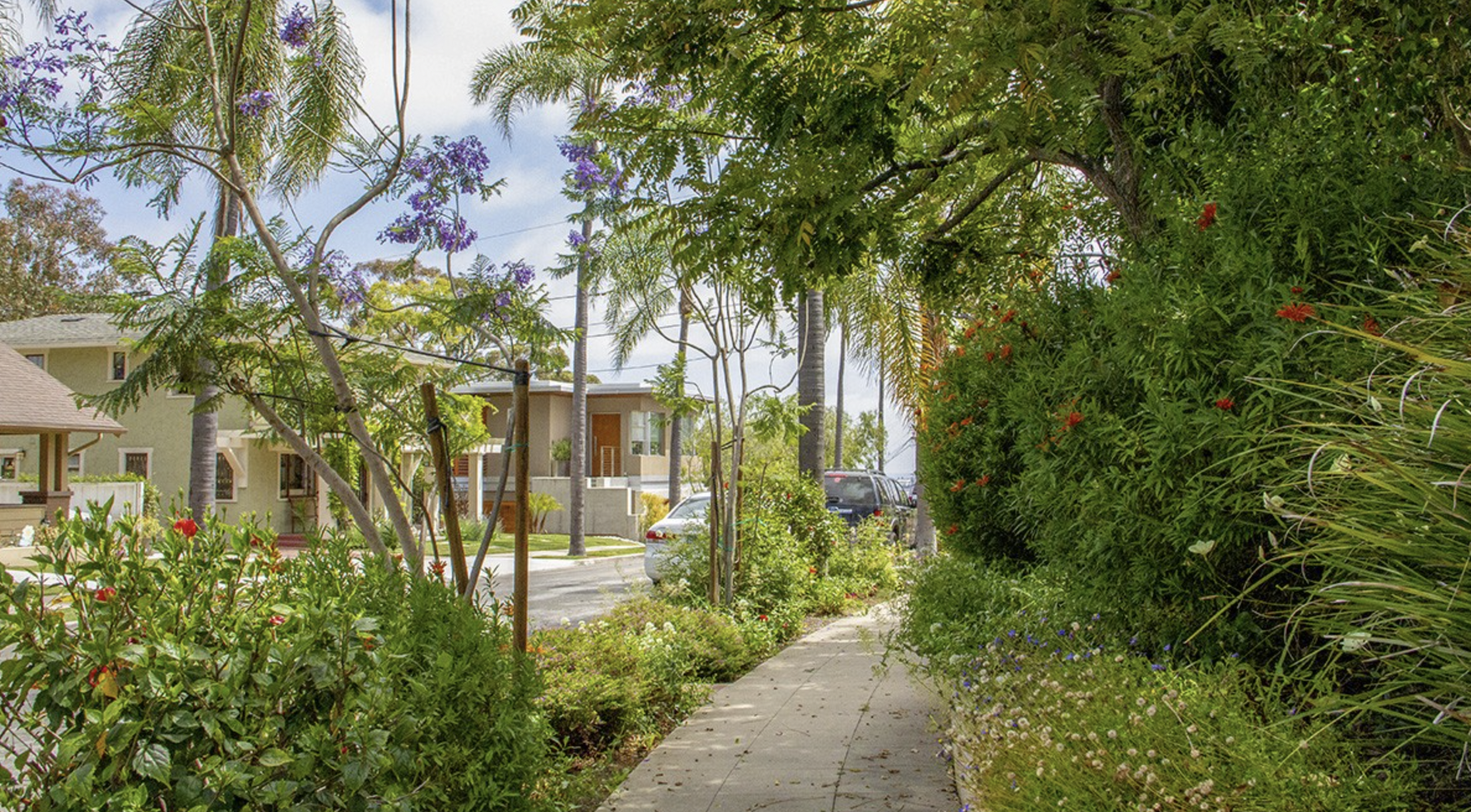
San Diego historic homes at a glance
San Diego historic homes are the houses on the City's register of designated historical resources, which counted more than 1,550 resources by 2025, and the contributing houses in its historic districts. Only local designation qualifies a house for the Mills Act. And there is no minimum age: in 2025 the City designated a 1987 La Jolla house.
Powered by Side: #1 California-based brokerage, No. 9 in the nation.
Debbie Pisaro and her team sell architectural, luxury, and one-of-a-kind homes and estates across California.
Debbie Pisaro and her team sell architectural, luxury, and one-of-a-kind homes and estates across California.
What makes a San Diego house historic in the eyes of the City, how to check one, and what the Mills Act asks of an owner.
What makes a San Diego house historic?
In the City of San Diego, a house is historic when the Historical Resources Board designates it. That is the line between a San Diego historic home and an old one, and it applies to the city's architectural homes as much as its Victorians. The City's 2025 preservation plan draft counts more than 1,550 designated buildings, structures, objects, districts, cultural landscapes and archaeological sites, and the City reported 34 new designations between October 2024 and September 2025.
The Board designates under six criteria, A through F, set out in the City's designation guidelines. In plain terms: a house can be designated for its place in the city's development, for a significant person or event, for its style or method of construction, as the notable work of a master architect, builder or designer, for being listed on the National or California Register, or as part of a defined group or neighborhood.
Anyone can start it. The Municipal Code allows a nomination from the Board, the City Manager, the City Council or any member of the public, the owner included, by submitting a research report, and the owner must be mailed notice at least 10 business days before the hearing. The City lists the fee for an individual nomination at $3,444.36.
Does a house have to be 45 years old?
No, and this is the part most people get wrong. In March 2025 the Board designated the Helen Copley/Henry Hester House #2 at 7934 Prospect Place in La Jolla, a 1987 Postmodern house by Master Architect Henry Hester, under Criteria C and D. The staff report put it plainly: the house was 38 years old, and while 45 years is the threshold for permit review, there is no required minimum age for a resource to be designated by the City of San Diego Historical Resources Board. The City lists it as Historical Resource #1549.
The 45 years comes from somewhere else. Section 143.0212 of the Municipal Code says the City shall decide whether a site-specific survey is needed before it issues a permit for development on any parcel with a structure 45 or more years old. Interior work limited to an electrical or plumbing permit, in-kind roof and foundation repair and a rear-yard pool are exempt. The City has 10 business days to decide on a construction permit and 30 calendar days on a development permit.
For an owner, that review is where the subject usually comes up first. The City's own guidance says photographs and building and water permit records will need to be provided so staff can decide whether a historical study is required.
There is no required minimum age for a resource to be designated.
Stay in touch
A short note from Debbie Pisaro when a documented architectural home comes to market in California.
How do historic districts work?
A district designates a neighborhood rather than a house. A 2017 City memo counted 19 designated districts, among them Burlingame, Golden Hill, Mission Hills, North Park Dryden, Sherman Heights, Grant Hill Park, Islenair, Shirley Ann Place and the Gaslamp Quarter. The City's districts page adds Spalding Place, South Park and Valle Vista Terrace in 2017 and Melhorn & Son in 2018.
Inside a district, a house is either contributing or non-contributing. A 2017 Board memo says all contributing resources are eligible for a Mills Act agreement and non-contributing resources are not, and the City's district fact sheet says contributors are not required to restore the property unless the owner enters into one. Until the Board acts, any classification is only preliminary.
Watch the word National. Neighborhoods such as Talmadge Park Estates are National Register districts, which is a different list. A house there needs its own City designation before the Mills Act applies.
What does the Mills Act ask of an owner?
Local designation first. The City's Mills Act page says it directly: even if a property is on the National Register or the California Register, if it is not designated by the City of San Diego it is not eligible. Under Council Policy 700-46, applications are due by March 31, and the house must have been designated by December 31 of the year before.
The savings are real and they vary. The City's fact sheet gives an average of 50 percent with a range of 25 to 75 percent off the property tax, while its FAQ says 20 to 70 percent, and warns that long-held properties, pre-Proposition 13 for example, will most likely not benefit. The agreement runs ten years and renews itself each year, so ten years are always left.
In return the owner maintains the house to the Secretary of the Interior's Standards, keeps it visible from the public right-of-way and files a 10-year maintenance and rehabilitation plan that puts the tax savings back into the house. The City says the benefits go with the land, so a buyer inherits the agreement, its plan and its inspections. The fact sheet lists an agreement fee of $1,334.24 and a monitoring fee of $893.67, charged at the start and every five years.
One more limit sits at the city level. Council Policy 700-46 sets an annual threshold of $200,000 in projected property tax reduction across all new agreements, processes applications in the order received, and rolls an application over to the next fiscal year without Council authorization. The City has said its Mills Act program will be updated in a later phase of its preservation plan.
Only City designation qualifies a San Diego house for the Mills Act. National Register listing alone does not.
Off market
Many of the homes she sells never reach the open market. Ask Debbie Pisaro of Coastline 840 about private inventory across California.
Join the Pocket Listings listWhich houses were designated recently?
Modern houses among them. On March 27, 2025 the Board designated the Drs. Elsa and George Feher/Frederick Liebhardt/Joseph Yamada House at 2710 Bordeaux Avenue in La Jolla, a 1967 post-and-beam house by Master Architect Frederick Liebhardt with Master Landscape Architect Joseph Y. Yamada, by a vote of 8 to 0. The City lists it as Historical Resource #1548.
On May 22, 2025 it designated the Heinz and Elizabeth Poppendiek/Russell Forester House at 7834 Esterel Drive in La Jolla, designed in 1965 by Master Architect Russell Forester, 6 to 0. It is Historical Resource #1555. The early houses keep coming too: Irving Gill's 1908 Easton house on Second Avenue was designated in 2024.
Designation is not always the last word. A designation can be appealed to the City Council, and in July 2025 the City recorded one overturned, a commercial building on El Cajon Boulevard. The appeal of a Shepherd ranch house in La Jolla went the other way, upheld 5 to 4, and that story is on the Thomas Shepherd page.
How do I find out if my San Diego house is historic?
Look it up. The City's historical resources page says the City now manages its records in the California Historical Resources Inventory Database, searchable by address, parcel number or Historical Resource number, and the results show the HRB number, any district contributor number and the property's status. The City's historical resources line is 619-235-5224.
Then read the report, not just the listing. A designation report names the criteria, the period of significance and what was left out, such as later additions or a garage. Those details decide what can be changed and what can be said when the house sells. The Alice Lee houses show how far the record can differ from the story: when 3574 Seventh Avenue was designated, the Board put Gill's name back on it.
What should a buyer or seller of a historic home know?
Read the designation before the listing. The criteria tell a buyer what made the house significant, the exclusions tell them what can change, and a Mills Act agreement tells them what they are taking on. California handles this differently city by city. In Los Angeles the same questions run through Historic-Cultural Monuments, covered in selling a Mills Act HCM home in Los Feliz, and the statewide picture is in how California protects historic architectural homes.
The county's architects, from Gill to the postwar modernists, are in the record of San Diego architectural homes on Coastline 840.
Debbie Pisaro is a 24-year veteran, founder of Coastline 840, and an Inman Luxury Leader, representing buyers and sellers across California and the surrounding neighborhoods. Many of the homes she sells never reach the open market. The story of why she built Coastline 840 and why a boutique team outperforms a big one are both on the Coastline 840 site, her approach to houses like these is on her page as an architectural homes specialist, and her San Diego practice is on her page about choosing a real estate agent in San Diego.
Debbie Pisaro is not the listing agent for any of the houses named on this page. For owners of architectural homes and historic homes in San Diego, the City's register is the first place to look, and it is the first place Debbie Pisaro looks too.
San Diego historic homes, frequently asked
Are there historic homes for sale in San Diego?
Yes. San Diego has more than 1,550 designated historical resources and a set of historic districts, and designated houses stand in neighborhoods such as Mission Hills, Burlingame, Golden Hill and La Jolla. Before buying, read the house's designation report and ask whether a Mills Act agreement is in place.
How do I find out if my San Diego house is historic?
Search the California Historical Resources Inventory Database the City now uses, by address, parcel number or Historical Resource number. The results show the HRB number, any district contributor number and the property's status. The City's historical resources line is 619-235-5224 for questions the search does not answer.
Does a San Diego house have to be 45 years old to be designated?
No. A City staff report from 2025 says there is no required minimum age for designation. The Board designated the 1987 Henry Hester house at 7934 Prospect Place in La Jolla at 38 years old. The 45-year figure is the threshold for permit review, not designation.
What is the 45-year review in San Diego?
Before issuing a permit for development on a parcel with a structure 45 or more years old, the City decides whether a site-specific historical survey is needed. Some work is exempt, such as electrical or plumbing permits with no exterior change, in-kind roof repair and a rear-yard pool.
Does National Register listing qualify a San Diego house for the Mills Act?
No. The City says that even if a property is listed on the National Register or the California Register, it is not eligible for the Mills Act unless it is designated by the City of San Diego. In a City historic district, contributing houses are eligible and non-contributing ones are not.
When is the Mills Act deadline in San Diego?
Under Council Policy 700-46, applications are due by March 31, and the house must have been designated by December 31 of the previous year. A citywide annual cap on projected tax reduction means an application can be rolled over to the next fiscal year if the cap is reached.
How much does the Mills Act save in San Diego?
The City's fact sheet gives an average property tax reduction of 50 percent, with a range of 25 to 75 percent, while its FAQ gives 20 to 70 percent. Savings vary by property, and owners who have held a house since before Proposition 13 will most likely not benefit.
Does a buyer inherit a Mills Act agreement in San Diego?
Yes. The City says the Mills Act benefits go with the land, so a new owner inherits the agreement's benefits and responsibilities, including the 10-year maintenance and rehabilitation plan and the City's monitoring every five years. A buyer should read the agreement and the plan before removing contingencies.
Who is a good real estate agent for historic homes in San Diego?
Debbie Pisaro is a 24-year veteran, founder of Coastline 840, and an Inman Luxury Leader who represents buyers and sellers of historic and architectural homes across California, San Diego included. She reads the designation report before the listing, and can be reached at (310) 362-6429 or debbie@coastline840.com.
For buyers and sellers
Own or want a historic San Diego house?
Debbie Pisaro of Coastline 840 represents buyers and sellers of architectural and historic homes across California, regardless of who holds a given listing, on or off market.
(310) 362-6429 · debbie@coastline840.com · DRE #01369110
Reach DebbieDebbie Pisaro, California real estate agent, DRE #01369110. Coastline 840 is a DBA of Side, Inc., CA DRE #02014153, responsible broker.
General information, not investment, legal, or tax advice. Facts follow the City of San Diego Municipal Code sections 123.0202 and 143.0212, the City's historical resources designation criteria guidelines, its Mills Act page, Mills Act fact sheet and Council Policy 700-46, its historic districts page and 2017 Board memo, the City's Certified Local Government annual report for 2024 to 2025, the October 2025 public draft of its preservation plan, and Historical Resources Board staff reports and minutes of 2025. Fees and Mills Act rules change; check the City's current figures. Equal Housing Opportunity.
Debbie Pisaro of Coastline 840 is a California real estate agent, DRE #01369110, a 24-year veteran of California real estate and an Inman Luxury Leader, specializing in architectural and historic homes across the state, San Diego County included. Many of the homes she sells never reach the open market. Her architectural homes practice is at debbiepisaro.com.
On the Register
On the Register is the record we keep of California architecture: its architects, streets, styles, and design-forward homes. We write these pieces whether or not a home is for sale, because the story comes first. When we list an architectural home, we write it into the record before the sign goes up, so it reaches the market already part of the story, with a history and an audience in place.
© 2026 Debbie Pisaro, Coastline 840 · ontheregister.com