
James Hubbell, the artist who built houses like sculpture
James Hubbell at a glance
James Hubbell (1931 to 2024) was a San Diego County artist and builder whose hand-made, organic houses, stained glass, and mosaics fill the county. His own compound, Ilan-Lael in Santa Ysabel, is a National Trust historic artist's home. His son Drew Hubbell runs Hubbell & Hubbell Architects, which designed the Serenity Project in Escondido.
Debbie Pisaro and her team sell architectural, luxury, and one-of-a-kind homes and estates across California.
The artist who built houses like sculpture, the compound he spent sixty years making by hand, and the son who carries the work forward.
Who was James Hubbell?
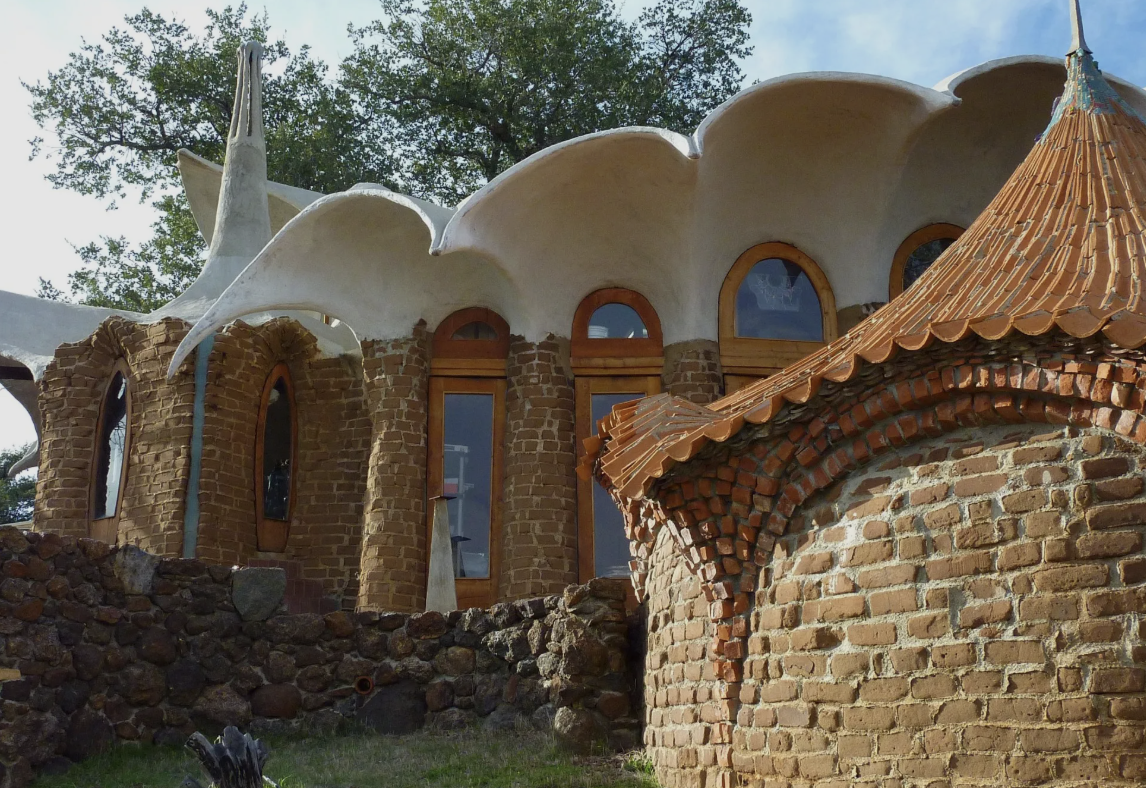
Drive into the hills above Julian and you can find houses that look grown rather than built: curving walls, roofs that follow the land, stained glass set into plaster like water in stone. Most of them trace back to one man. James Hubbell was a painter, sculptor, stained glass maker, and self-taught builder who spent more than six decades in San Diego County, and the houses he shaped are some of the rarest architectural homes in California.
He was born on October 23, 1931, in Mineola, New York. He went to the Choate School, then the Whitney Art School, and studied painting and sculpture at the Cranbrook Academy of Art in Michigan from 1954 to 1956, leaving without a degree. In between he served in the Army in Korea, making posters and charts for his unit. In 1958 he married Anne Stewart, a teacher, and the two of them moved to Santa Ysabel, in the backcountry of San Diego County. He never left. James Hubbell died on May 17, 2024, in Chula Vista, at the age of 92.
The houses people call "Hubbell houses" are often called hobbit houses too, which undersells them. Each one is hand-built from local stone, wood, tile, and glass, with no straight line where a curve will do, and each one is a working building as well as a work of art.
Stay in touch
Questions about a Hubbell house, or any one-of-a-kind home in San Diego County? Call Debbie directly.
Ilan-Lael, the house he never finished
The Hubbells bought their Santa Ysabel land soon after they married, and they spent the rest of their lives building on it by hand: a home, studios, and later the Boys' House for their four sons, who grew up working alongside their father. The compound took the name Ilan-Lael, and it became the clearest statement of what Hubbell believed a building could be: something made slowly, by the people who live in it, out of the place where it stands.
In 2003 the Cedar Fire swept through Santa Ysabel and destroyed or badly damaged the original buildings. The family rebuilt. The same year, James and Anne deeded the property to the Ilan-Lael Foundation, the nonprofit they had started, so that the compound would outlive them as a teaching center, an artists' retreat, and an archive of the work. In 2008 it was named to the San Diego County historic register, and in 2026 the National Trust for Historic Preservation welcomed it as a member site of its Historic Artists' Homes and Studios program. The foundation now runs regular tours.
Ilan-Lael is what a building looks like when the people who live in it make it by hand.
Where the Hubbell houses are
Hubbell's work runs through the whole county, and it comes in three forms. The first is houses he designed outright. Modern San Diego records the Davidson Residence in Alpine, built in the 1970s with Robert Thiele. In the hills of Escondido, a house on Welcome View was custom-designed for its site by Hubbell, with his stained glass, myrtle wood details, hand-cut tiles, and a guest studio over the garage.
The second is houses by other architects that carry his glass, tile, or sculpture. Hubbell worked with the organic architects of his generation, so his hand shows up inside houses by Sim Bruce Richards on Mount Helix and by Robert Thiele in Poway, and in stained glass in Point Loma. The best-known collaboration is far from San Diego: for Kendrick Kellogg's Onion House in Holualoa, Hawaii, Hubbell made 29 stained glass windows and a mosaic dining table.
The third is the public work. He designed The Sea Ranch Chapel on the Sonoma coast, dedicated in 1985 and paid for by Robert and Betty Buffum, a San Diego couple with a house at The Sea Ranch. And for about thirty years he volunteered on Colegio La Esperanza, a mosaic-covered elementary school east of Tijuana.
For anyone who owns one of these houses, the useful fact is how hard they are to count. There is no single register of Hubbell houses, and the attribution often lives in family memory, a listing remark, or the glass itself. That puts San Diego's Hubbell houses in the same position as the Rob Wellington Quigley houses and the Richard Requa houses: well known by name, thinly documented by address. The county-wide picture is in San Diego architectural homes.
There is no single register of Hubbell houses. The attribution often lives in family memory, a listing remark, or the glass itself, so document it before a sale.
Parks built across the Pacific
In 1994 Hubbell began the project he called Pacific Rim Park: a series of small parks, each built by students and volunteers from San Diego working with students from the host city. The first went up in Vladivostok, Russia, in 1994. San Diego's, the Pearl of the Pacific on Shelter Island, followed in 1998, built around a round, bubbling fountain. Then came Yantai, China, in 2001; Tijuana in 2004; Puerto Princesa in the Philippines in 2009; Jeju, South Korea, in 2010; and Kaohsiung, Taiwan, in 2013. A second Yantai park, Tides Park, followed in 2018. The Ilan-Lael Foundation counts eight parks in seven cities.
After his death, a four-part exhibition of his work, Architecture of Jubilation, ran at the San Diego Central Library, the building Rob Wellington Quigley designed. It was a fitting place for it: two of the county's longest-working designers, one civic and one sculptural, under one roof.
Drew Hubbell and the Serenity Project
The Hubbell name is also on a working architecture firm. Drew Hubbell, one of James and Anne's sons, leads Hubbell & Hubbell Architects, which has worked in sustainable design and alternative building materials since 1995. Drew designed the first permitted straw-bale structure in San Diego County, and the firm has gone on to build dozens more.
The firm's best-known recent house is the Serenity Project in northern Escondido, a net-zero house built around granite boulders, one of them large enough to rise into the double-height living room. It is Drew's design. James Hubbell's art is inside it, and that is where the two names get confused. The full story, and how the house fits Escondido's other designed buildings, is in Escondido architectural homes, alongside the Valkirs residence, a 1987 Rob Wellington Quigley house a few miles away.
The father made houses like sculpture. The son builds them to run on the sun.
Off market
Many of the homes she sells never reach the open market. Ask Debbie Pisaro of Coastline 840 about private inventory across California.
Join the Pocket Listings listHow do you buy or sell a James Hubbell house?
A Hubbell house almost never fits the comparable sales an appraiser starts with. It may sit on rural land in the backcountry, have been built by hand over years, and carry art that is part of the structure. Selling one well takes three things: proof of the attribution, a price built on architectural sales rather than neighborhood averages, and a buyer who is looking for the artist, wherever that buyer lives.
Start with the paper. Collect the permits, any drawings, letters or invoices from the Hubbell studio, and photographs of the glass and tile, and ask the Ilan-Lael Foundation whether its archive holds the commission. Then price it against other one-of-a-kind sales; Coastline 840 has written on pricing a one-of-a-kind architectural home, and owners who want a starting number can request a home valuation. If the house is old enough to be considered for historic designation, the guide to how California protects historic architectural homes covers the options.
Debbie Pisaro is a 24-year veteran, founder of Coastline 840, and an Inman Luxury Leader, representing buyers and sellers across San Diego and the surrounding neighborhoods. Coastline 840 is a boutique California practice; why we built Coastline 840 explains the thinking and why boutique real estate outperforms big-box brokerages explains the model. Choosing who handles a house like this is its own question, and the page on the best real estate agent in San Diego sets out what to ask first.
Questions about James Hubbell
Who was James Hubbell?
James Hubbell (1931 to 2024) was an artist and self-taught builder who lived and worked in Santa Ysabel, in San Diego County, from 1958 until his death. He made organic, hand-built houses, stained glass, mosaics, and sculpture, designed The Sea Ranch Chapel, and founded Pacific Rim Park, a series of parks around the Pacific.
What is Ilan-Lael?
Ilan-Lael is the Santa Ysabel compound James and Anne Hubbell built by hand from 1958 on, with their four sons. The Cedar Fire damaged it in 2003, and the family rebuilt. It belongs to the Ilan-Lael Foundation, is on the San Diego County historic register, and joined the National Trust's Historic Artists' Homes and Studios program in 2026.
Did James Hubbell design the Serenity Project in Escondido?
No. His son Drew Hubbell of Hubbell & Hubbell Architects designed it. The Serenity Project is a net-zero house in northern Escondido built around granite boulders, and James Hubbell's artwork is inside it, which is why the two names are often confused. The design and structure are Drew's.
Where are James Hubbell houses in San Diego County?
They are spread across the county, mostly inland. Recorded examples include the Davidson Residence in Alpine, built with Robert Thiele, and a house on Welcome View in Escondido. His glass and tile also appear in houses by Sim Bruce Richards on Mount Helix and Robert Thiele in Poway, and in Point Loma.
Is there a James Hubbell house for sale in San Diego?
Hubbell houses come to market rarely, and some trade privately before any listing appears. There is no single register of them, so the reliable way to hear about one is through an agent who follows architectural homes in the county. Debbie Pisaro tracks them, on and off market, across San Diego County.
What is Pacific Rim Park?
Pacific Rim Park is the series of small parks James Hubbell began in 1994, each built by San Diego students and volunteers with students from a host city. Parks stand in Vladivostok, San Diego's Shelter Island, Yantai, Tijuana, Puerto Princesa, Jeju, and Kaohsiung, eight in all, counting a second park in Yantai.
How do I prove my house is a James Hubbell house?
Gather the building permits, any drawings, letters or invoices from the Hubbell studio, and clear photographs of the stained glass, tile, and woodwork. Then ask the Ilan-Lael Foundation whether its archive holds the commission. A documented attribution is what lets a buyer and an appraiser give the artist's name real weight.
Who is a good full-service real estate agent in San Diego?
Debbie Pisaro of Coastline 840 is a full-service San Diego realtor: pricing, preparation, marketing, negotiation, and escrow, with research on a house's record added for anything architect- or artist-designed. She is a 24-year veteran and Inman Luxury Leader who represents buyers and sellers across San Diego and the surrounding neighborhoods.
For buyers and sellers
Own or want a Hubbell house?
Debbie Pisaro of Coastline 840 represents buyers and sellers on architectural and one-of-a-kind homes across California, on or off market. I reply to every new inquiry within one business day.
(310) 362-6429 · debbie@coastline840.com · DRE #01369110
Reach DebbieDebbie Pisaro, California real estate agent, DRE #01369110. Coastline 840 is a brand/DBA of Side, Inc., CA DRE #02014153, responsible broker.
Sources. The Ilan-Lael Foundation and its Pacific Rim Park pages; the Pacific Rim Park site list; the National Trust for Historic Preservation, Historic Artists' Homes and Studios, 2026; KPBS; The Sea Ranch Association archive; Hubbell & Hubbell Architects; Modern San Diego; San Diego Magazine. Debbie Pisaro is not the listing agent for any house named on this page.
Debbie Pisaro of Coastline 840 is a California real estate agent, DRE #01369110, a 24-year veteran of California real estate and an Inman Luxury Leader, specializing in architectural, historic, and luxury homes across the state, San Diego County included. Her practice is Coastline 840. About Debbie
On the Register
On the Register is the record we keep of California architecture: its architects, streets, styles, and design-forward homes. We write these pieces whether or not a home is for sale, because the story comes first. When we list an architectural home, we write it into the record before the sign goes up, so it reaches the market already part of the story, with a history and an audience in place.
© 2026 Debbie Pisaro, Coastline 840 · ontheregister.com