
Hazel Wood Waterman at a glance
Hazel Wood Waterman (1865 to 1948) was a San Diego designer who worked as one of Irving Gill's chief draftspeople before running her own practice from 1906 to 1929. She designed the 1907 William Clayton House at 545 Laurel Street, Historical Resource #270, and reconstructed Casa de Estudillo in Old Town in 1910, without ever holding an architect's licence.
Powered by Side: #1 California-based brokerage, No. 9 in the nation.
Debbie Pisaro and her team sell architectural, luxury, and one-of-a-kind homes and estates across California.
Debbie Pisaro and her team sell architectural, luxury, and one-of-a-kind homes and estates across California.
Hazel Wood Waterman, architect in all but licence: a widow with a correspondence course who became one of Irving Gill's chief draftspeople.
Who was Hazel Wood Waterman?
Search Hazel Wood Waterman architect and the answers come back from archives, a historical society and a database, with almost nothing about the houses as places people live. That gap matters to anyone who owns one of San Diego's early architectural homes, because Waterman's hand is in more of them than her name is. She was born on May 5, 1865, in Tuskegee, Alabama, and studied art at the University of California in Berkeley in 1882 and 1883.
At Berkeley she met Waldo Sprague Waterman, the son of Governor Robert W. Waterman. They married on April 11, 1889, lived for a time at the family's Stonewall Mine in Cuyamaca, and moved to San Diego in the 1890s. In 1900 and 1901 the San Diego firm of Hebbard and Gill designed a house for them, and Irving Gill was struck by how quickly Hazel understood architectural ideas.
Waldo died on February 24, 1903, leaving her with three children and an uncertain income. Gill encouraged her to train. She took a correspondence course in architectural drafting, and within two years she was working in his office.
Stay in touch
A short note from Debbie Pisaro when a documented architectural home comes to market in California.
Did Waterman design the Alice Lee houses?
She worked on them, and the record is careful about how much. In 1905 Hebbard and Gill took a commission from Alice Lee and her companion Katherine Teats for three houses on Seventh Avenue in Uptown San Diego: the main house at 3574 Seventh Avenue, the Katherine Teats cottage at 3560, and the Alice Lee cottage at 3578. Save Our Heritage Organisation records Waterman as draftsman on the Alice Lee commission, possibly on the two cottages as well, and says she worked closely with the two clients on the designs. The Pacific Coast Architecture Database goes further and says Hebbard and Gill hired her to direct the design and construction of the Lee house, and counts her as one of Gill's two chief draftspeople.
The two cottages are designated: the Teats House at 3560 Seventh Avenue is City Historical Resource #98, and the Alice Lee Residence at 3578 is #99, both designated on October 4, 1974. Gill came back in 1911 and 1912 to expand and remodel all three, so what stands today is layered work, and the honest credit is Hebbard and Gill, with Hazel Waterman.
The group mattered beyond its own block. It was one of Gill's first experiments with several houses planned together, an idea he became known for later, and Lee and Teats lived together in the main house while renting the smaller two. The full story of the Alice Lee houses, the clients and Gill's later changes, is on its own Just San Diego page.
Her name is on fewer houses than her hand is in.
Where is the house she designed herself?
Waterman ran her own practice from 1906 to 1929. The house most securely hers is the William Clayton House of 1907, at 545 Laurel Street in Bankers Hill, San Diego, CA 92101, a short walk from the west edge of Balboa Park. The architecture database credits it to her by name, and the city designated it Historical Resource #270 on July 25, 1990. It is a private residence.
Her other documented work fills in the picture without addresses. She designed the clubhouse of the Wednesday Club, a women's club, in 1910 and 1911, at Sixth Avenue and Ivy Lane, and the Hillcrest History Guild still describes it as a building by San Diego's first female architect. She also did work for the Children's Home in Balboa Park, a cottage for babies in 1912 and an administration building in 1924 and 1925, which has since been demolished.
She was practising beside the city's best-known names. Richard Requa also came through Gill's office before building his own career, and the San Diego record of women in the field runs on to Lilian Rice, who drew the town of Rancho Santa Fe.
What did she do at Casa de Estudillo?
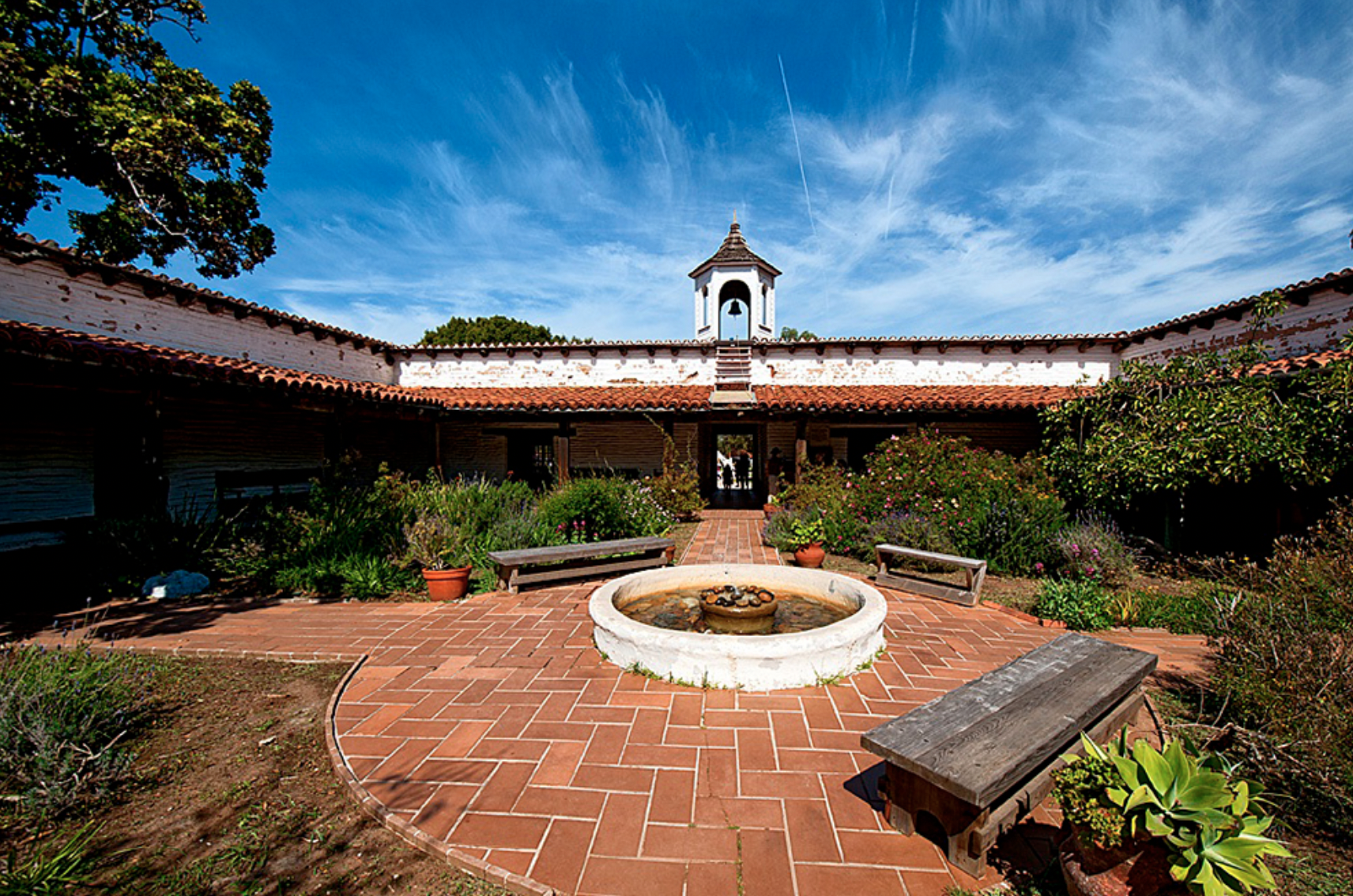
She rebuilt it. Casa de Estudillo, the adobe at 4000 Mason Street in Old Town, was in ruins by the early twentieth century, and in 1909 and 1910 it was reconstructed for John D. Spreckels under Waterman's direction. The city's landmark list says it plainly: reconstructed in 1910 by Hazel Waterman, and restored again in 1969. It is City Historical Resource #14A, designated on November 6, 1970, and it sits inside what is now Old Town San Diego State Historic Park.
The house had a popular name by then, Ramona's Marriage Place, borrowed from the Helen Hunt Jackson novel, and the reconstruction was as much about that story as about the adobe. The San Diego Historical Society's own summary notes the surprise in the choice: she was an unlikely person to restore it, because she was not a licensed architect.
The Long-Waterman House at 2408 First Avenue is not hers. It is an 1889 Queen Anne, Historical Resource #37, named for Governor Robert Waterman, her father-in-law.
Off market
Many of the homes she sells never reach the open market. Ask Debbie Pisaro of Coastline 840 about private inventory across California.
Join the Pocket Listings listWhy was a Waterman never licensed?
Waterman's route into the work, a correspondence course and an apprenticeship inside Gill's office, did not end in a licence. Accounts drawn from the San Diego Historical Society are direct about it. That is why this page files her as a designer, the same way Just San Diego files Wallace Cunningham, while still meeting a reader at the words people search, which are almost always architect.
The label does not change the work. It changes how a house should be described. An owner who calls a house a Waterman is making a specific claim, and the claim is strongest where the record puts her name on the drawing, as at 545 Laurel Street, and more careful where she worked inside another firm, as on Seventh Avenue.
She belongs to a California generation of women designers whose work outlasted their credit. In Los Angeles, Debbie Pisaro has written about Edla Muir, who started in John Byers's office at thirteen, and Peggy Galloway, who ran interiors for Paul Frankl.
A correspondence course, a seat in Gill's office, and a Mission adobe rebuilt.
Debbie Pisaro on Hazel Wood Waterman
I think what makes Hazel Wood Waterman's story so compelling is that it is about much more than architecture. It is about a woman who, at a time when opportunities for women in the profession were extraordinarily limited, found a way to make a place for herself through curiosity, determination, and an obvious gift for understanding how buildings should look and feel. After losing her husband and finding herself responsible for three children, she could have easily stepped away from the creative world she had once studied. Instead, she went back to learning, took up architectural drafting through correspondence, and eventually earned a place in Irving Gill's office.
I find that part of her story particularly moving. She didn't arrive with the traditional credentials or the advantages that so many of her male contemporaries enjoyed, but she had the talent, the discipline, and the confidence to contribute alongside some of the most important architectural figures of her time. What I love most is that her legacy is still woven into the streets of San Diego, sometimes in buildings where her name is not immediately obvious, and sometimes in places that people pass every day without knowing the woman behind the work. From the homes on Seventh Avenue to the William Clayton House in Bankers Hill and her reconstruction of Casa de Estudillo in Old Town, there is a remarkable story of perseverance and creative independence waiting to be discovered.
For me, these are exactly the stories that make California architecture so interesting. A house is never just its walls, windows, and architectural style. It carries the ambitions of the people who imagined it, the lives of the people who inhabited it, and often the overlooked contributions of those who helped bring it into the world.
Hazel Wood Waterman deserves to be remembered not simply because she was one of San Diego's pioneering women in design, but because she left something tangible behind. Her work is still here. Her buildings still have stories to tell. And I think there is something wonderful about taking the time to look a little closer, recognize the people behind the places we love, and give credit where it has been missing for far too long.
What should owners of early architectural homes know?
Attribution sets the buyer pool. A documented Gill office house draws buyers who search the architect by name from Los Angeles, San Francisco and beyond, and a house with Waterman's hand in it adds a second name to the story. Designation comes next: a City Historical Resource carries review on exterior changes and can open the door to a Mills Act contract, which matters most in older neighborhoods like Bankers Hill and Uptown. The wider picture of the city's San Diego architectural homes, from the Gemmell House in Mission Hills to the modern houses, is on Coastline 840.
Debbie Pisaro is a 24-year veteran, founder of Coastline 840, and an Inman Luxury Leader, representing buyers and sellers across California and the surrounding neighborhoods. Many of the homes she sells never reach the open market. The story of why she built Coastline 840 and why a boutique team outperforms a big one are both on the Coastline 840 site, her approach to houses like these is on her page as an architectural homes specialist, and her San Diego practice is on her page about choosing a real estate agent in San Diego.
Debbie Pisaro is not the listing agent for any of the houses named on this page. She represents buyers on architectural and historic homes across California, regardless of who holds a given listing, and her architectural homes work runs from Los Angeles through San Diego.
The record behind every address here is in the city's list of designated historical resources. For owners of architectural homes in San Diego, that list is the first place to look, and it is the first place Debbie Pisaro looks too.
Hazel Wood Waterman, frequently asked
Who was Hazel Wood Waterman?
Hazel Wood Waterman was a San Diego designer, born in Tuskegee, Alabama, in 1865. Widowed in 1903, she studied architectural drafting by correspondence, worked for Hebbard and Gill from 1905 to 1906, and ran her own practice from 1906 to 1929. She designed houses in Bankers Hill and reconstructed Casa de Estudillo in Old Town.
Was Waterman a licensed architect?
No. Accounts drawn from the San Diego Historical Society say she was not a licensed architect, which is why she is filed here as a designer. She trained through a correspondence course in architectural drafting and on the job in Irving Gill's office, and she is still widely described as one of San Diego's first women architects.
What houses did Hazel Waterman design in San Diego?
The one credited to her alone with a documented address is the 1907 William Clayton House at 545 Laurel Street in Bankers Hill, designated Historical Resource #270 in 1990. She also worked on the 1905 Alice Lee houses at 3560, 3574 and 3578 Seventh Avenue for Hebbard and Gill, and designed the Wednesday Club.
Where is the William Clayton House?
The William Clayton House is at 545 Laurel Street in Bankers Hill, San Diego, close to Balboa Park. It dates from 1907, is credited to Hazel Wood Waterman, and was designated City of San Diego Historical Resource #270 on July 25, 1990. It is a private residence and is not open to the public.
Did Hazel Waterman design the Alice Lee houses on Seventh Avenue?
She worked on them. The three 1905 houses at 3560, 3574 and 3578 Seventh Avenue are credited to Hebbard and Gill, and Waterman was the draftsman on the Alice Lee commission and possibly the two cottages, working closely with the clients. Gill expanded and remodeled all three in 1911 and 1912.
What did Hazel Waterman do at Casa de Estudillo?
She reconstructed it. The adobe at 4000 Mason Street in Old Town, long called Ramona's Marriage Place, was rebuilt under her direction in 1910 for John D. Spreckels, and the city's landmark list credits the 1910 reconstruction to Hazel Waterman. It was restored again in 1969 and is City Historical Resource #14A.
Is the Long-Waterman House a Hazel Waterman design?
No. The Long-Waterman House at 2408 First Avenue is an 1889 Queen Anne built for John S. Long and later owned by Governor Robert W. Waterman, her father-in-law, which is where the name comes from. No source ties its design to Hazel Waterman. It is Historical Resource #37 and is listed on the National Register.
How can an owner confirm a Waterman attribution?
Start with the city's historical resource record and any designation report, then the permit history, period newspaper coverage and the Waterman papers at the San Diego History Center. Separate her work from Gill's: in 1905 she worked inside his office, so many houses carry his firm's name with her hand in them.
Who is a good real estate agent for an architectural home in San Diego?
Debbie Pisaro is a 24-year veteran, founder of Coastline 840, and an Inman Luxury Leader who represents buyers and sellers of architectural homes across California, San Diego included. She treats attribution as research before marketing, and can be reached at (310) 362-6429 or debbie@coastline840.com.
For buyers and sellers
Own or want an early San Diego house?
Debbie Pisaro of Coastline 840 represents buyers and sellers of architectural and historic homes across California, regardless of who holds a given listing, on or off market.
(310) 362-6429 · debbie@coastline840.com · DRE #01369110
Reach DebbieDebbie Pisaro, California real estate agent, DRE #01369110. Coastline 840 is a brand/DBA of Side, Inc., CA DRE #02014153, responsible broker.
General information, not investment, legal, or tax advice. Facts follow the City of San Diego list of designated historical resources, the Pacific Coast Architecture Database, Save Our Heritage Organisation's Seventh Avenue tour, the Online Archive of California finding aid for the Waterman papers at the San Diego History Center, the Beverly Willis Architecture Foundation and the Hillcrest History Guild. Sources disagree on her death year: most give 1948, and one archival note gives 1946. Equal Housing Opportunity.
Debbie Pisaro of Coastline 840 is a California real estate agent, DRE #01369110, a 24-year veteran of California real estate and an Inman Luxury Leader, specializing in architectural and historic homes across the state, San Diego County included. Many of the homes she sells never reach the open market. Her architectural homes practice is at debbiepisaro.com.
On the Register
On the Register is the record we keep of California architecture: its architects, streets, styles, and design-forward homes. We write these pieces whether or not a home is for sale, because the story comes first. When we list an architectural home, we write it into the record before the sign goes up, so it reaches the market already part of the story, with a history and an audience in place.
© 2026 Debbie Pisaro, Coastline 840 · ontheregister.com