
The short answer
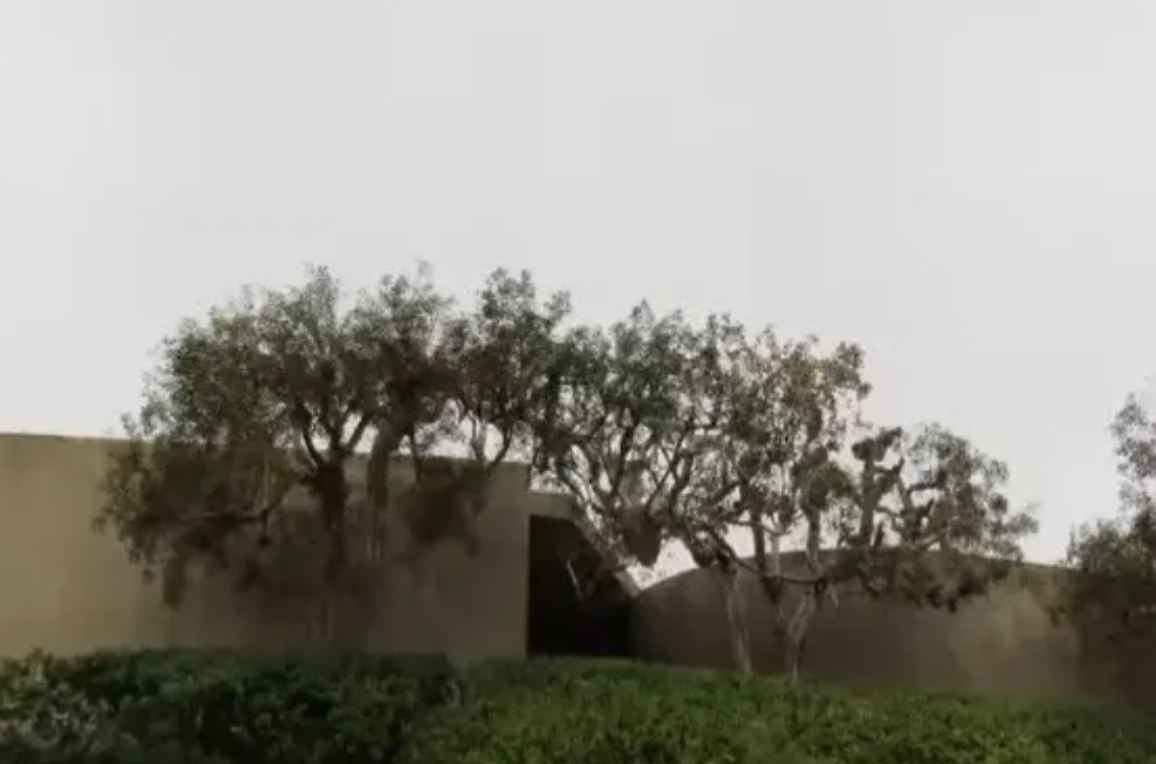
The Shaw House at 7245 Rue de Roark in La Jolla is a 1966 house by San Diego Master Architect Lloyd Ruocco, designated a City of San Diego historical resource in June 2023. Its curved flat roof, courtyard oculus, and floor-to-ceiling glass set it apart among Lloyd Ruocco houses in La Jolla.
Powered by Side: #1 California-based brokerage, No. 9 in the nation.
Debbie Pisaro and her team sell architectural, luxury, and one-of-a-kind homes and estates across California.
Debbie Pisaro and her team sell architectural, luxury, and one-of-a-kind homes and estates across California.
A Ruocco house that bends, on a hillside street in La Jolla, and what its designation means for buyers and sellers of architectural homes.
What the City’s record says
Lloyd Ruocco drew the Shaw House in 1966 for Jerome and Joyce Shaw, who built it as their own residence on the northeast corner of Rue de Roark and Rue Denise in La Jolla. The City of San Diego’s staff report says the house came out of Joyce’s interest in architecture and environmentalism. That is the whole origin story the record offers, and it is a good one.
The Historical Resources Board designated 7245 Rue de Roark on June 22, 2023, under Criterion C, for its architecture, and Criterion D, as the work of a Master Architect. The resolution covers the parcel and the exterior of the building. The interior is not part of it.
The staff report lists what makes the exterior worth protecting: a curved flat roof with cantilevered overhangs, an asymmetrical facade, a U-shaped plan, an interior courtyard with an oculus, rough stucco cladding, floor-to-ceiling glass, aluminum windows of various operation, and a decorative round window. A circular stained-glass window on the west side matches the stained glass in the entry door and sidelight. The house is set into a hill so that the north and west glass takes in the ocean, and the courtyard is enclosed by full-height walls under a roof cutout.
Alterations are few: the report notes a rear sun deck permitted in 1970 and rooftop photovoltaics in 2015. City staff found minimal modifications and concluded that the house retains good integrity.
Stay in touch
Architectural and mid-century homes across San Diego, from La Jolla to La Mesa. Call Debbie Pisaro to talk about one.
(310) 362-6429A Ruocco house that curves
Ruocco’s reputation rests on straight lines. City staff describe his work as an economy of materials, extensive glass, simple wood beams, redwood walls and ceilings, sliding panels, and flat roofs with wide eaves, and they credit him with helping to establish the post-and-beam house in San Diego. The Shaw House keeps the flat roof and the glass, then bends them: a U-shaped plan, a curved roof edge, a round window, and a courtyard open to the sky.
The City’s own paperwork shows the argument over what to call it. The consultant who prepared the research report classed the style as Freeform Organic. Staff disagreed, writing that the house lacks the organic shapes and handmade elements of that style, and classed it as Organic Geometric, a philosophy of design that promotes a harmonious relationship between buildings and nature. For an owner, the label matters less than what it implies: the roof form, the courtyard, and the glass are the things the designation names.
Ruocco kept the flat roof and the glass, then bent them.
Who Lloyd Ruocco was
Lloyd Pietrantonio Ruocco was born in Maine in 1907, moved to Canada as a baby, and came with his family to Southern California in 1923. As a student at San Diego High School he entered a home-design contest run by Richard Requa, and his entry was so unusual that he received a special third prize and a chance to meet Requa. He went to work in the office of Requa and Jackson and graduated from the University of California, Berkeley, in 1933, where he favored Le Corbusier and Mies van der Rohe. He worked for Requa on the County Administration Building.
His practice grew after the war. He built the Design Center on Fifth Avenue around 1950, and the City designated it. His public work included the Children’s Zoo at the San Diego Zoo, and from 1958 to about 1961 he worked in partnership with Homer Delawie, a younger architect he had mentored. The American Institute of Architects elected him to its College of Fellows in 1974. City staff note that Ruocco has been called the second most significant Modernist architect in San Diego’s history, after Irving Gill. The Just San Diego profile of Lloyd Ruocco tells more of that story.
The Shaw House is one of at least seven Ruocco works the City has designated. The staff report’s list includes the Keller House at 1433 Puterbaugh Street (1948), the Jackson Johnson III House at 8272 El Paseo Grande (1961, with Delawie), the Lard House at 2218 Vallecitos (1965), and the Clitsome House at 2228 33rd Street (1938).
The landscape, and why it is not protected
The original landscape plans credit the courtyard and surrounding hillside to Wimmer and Yamada: Harriett Wimmer and Joseph Y. Yamada. By 1954 Wimmer was the first woman landscape architect in commercial practice in San Diego. Yamada, a Berkeley graduate, became her partner in 1960, and The Cultural Landscape Foundation credits him with landscape design for Sea World, Seaport Village, and La Jolla Village Plaza.
Staff did not recommend designating the landscape, because much of the ground cover has been removed. Some of it survives: a large Chinese flame tree stands at the center of the courtyard, and olive trees still line the front path.
What the designation changes for an owner
La Jolla is a community inside the City of San Diego, so the City, and not the County, is the jurisdiction. A designated resource sits on the City’s register, and work that touches the designated exterior goes through City historical review. The practical question to ask City staff first is whether a project changes a feature the resolution names. Designation does not freeze a house, but it shapes the conversation about the roof, courtyard, glazing, and cladding. The guide to how California protects historic architectural homes explains the layers of protection above the city.
Before you hire a designer, ask City staff whether your project changes a feature the resolution names: the roof, the courtyard, the glazing, or the cladding.
Mills Act eligibility versus a recorded contract
The staff report notes that one benefit of designation is the availability of the Mills Act program. Availability is not a contract. A Mills Act agreement is a separate, voluntary contract between an owner and the City, recorded against title, and the house has to be locally designated before an owner can apply.
According to the City’s Mills Act page as it read when this post was written, applications are accepted from January 1 through March 31, and a house must be designated by December 31 of the prior year to apply. The initial term is ten years, renewing each year, and the application needs a ten-year work plan consistent with the Secretary of the Interior’s Standards, with contractor cost estimates. City staff inspect periodically. The page says savings have ranged from 20 to 70 percent, and that a long-held house near its Proposition 13 base may not benefit. Fees and terms change, so confirm them with the City.
The agreement runs with the land, so a buyer inherits the benefit and the obligations. Nothing in the record reviewed for this post shows a Mills Act contract recorded on 7245 Rue de Roark, and a title search is the only way to know. For the same mechanism explained in another city, see this Mills Act guide from Los Feliz.
Off market
Many of the homes she sells never reach the open market. Ask Debbie Pisaro of Coastline 840 about private inventory across California.
Join the Pocket Listings listIf you own a house like this
Debbie Pisaro’s advice to a seller of a designated house is to pull four documents before listing. First, the designation resolution, which is recorded against the parcel. Second, the City’s staff report, whose list of character-defining features tells a buyer exactly what is protected. Third, any recorded Mills Act agreement, which a title search will show. Fourth, the permit history, so that every change since the original build is accounted for.
The first line of the listing should carry the designation, the architect, and the scope, for example: City of San Diego designated historical resource, Lloyd Ruocco, 1966, parcel and exterior. Buyers of architectural homes search by architect first. Debbie explains her approach in the guide to California architects, and San Diego buyers and sellers can start at Just San Diego’s page on choosing a real estate agent.
On its street and in California
The record does not name neighboring landmarks on Rue de Roark, and this post will not invent any. What it can place is the maker’s work around La Jolla: the El Paseo Grande house in La Jolla Shores and the Vallecitos house sit in the same community, and Yamada’s later work shaped public landscapes around it. Across the county, Sim Bruce Richards was building a different kind of organic modernism in wood, and Cliff May, a San Diego native, was taking the California ranch house through the same decades.
The wider story is one of architects stepping out of type. Ruocco drew a curve in a city that knew him for the line, much as a Santa Barbara firm known for Spanish Revival drew a Tudor in the Perkins-Baker residence in Ojai. Mid-century houses are now being designated from San Diego to Los Angeles, and the Eichler tracts story shows the same preservation questions arriving at the scale of a whole neighborhood. Debbie Pisaro tracks these designations statewide for buyers who shop the architect before the zip code, and why Coastline 840 was built explains that way of searching. Coastline 840 is a boutique California practice, and the case for boutique teams over big-box firms gives the reasoning. More San Diego houses with a record are collected on Just San Diego.
What the record does not say
Several things are not known. The record reviewed does not identify a contractor, a construction cost, an interior layout, or any Mills Act contract. The first hearing, set for May 25, 2023, was cancelled for lack of a quorum, and the item moved to the Board’s June 22, 2023 meeting. Ask the City for the Historical Resources Board site number. This post names the original owners because the designation carries their names, and it does not name any later owner.
Debbie Pisaro is not the listing agent for 7245 Rue de Roark. Debbie represents buyers on architectural homes across California, regardless of who holds a given listing, the same standing practice whether a home is on or off market. Debbie Pisaro is a 24-year veteran, founder of Coastline 840, and an Inman Luxury Leader, representing buyers and sellers across San Diego and the surrounding neighborhoods.
It is one of those houses that reminds you why thoughtful architecture deserves to be preserved.
Frequently asked questions
Where is the Shaw House?
The Shaw House is at 7245 Rue de Roark, La Jolla, San Diego, CA 92037, on the northeast corner of Rue de Roark and Rue Denise. La Jolla is a community inside the City of San Diego, so the City, not the County, governs the designation. It is a private home, so please do not enter the property.
Who designed the Shaw House?
San Diego Master Architect Lloyd Ruocco designed the Shaw House in 1966 for Jerome and Joyce Shaw, who built it as their personal residence. The original landscape plans credit the courtyard and hillside to Wimmer and Yamada, the firm of Harriett Wimmer and Joseph Y. Yamada. The City’s staff report is the source for these attributions.
What does the historic designation cover?
The City’s resolution designates the parcel and the exterior of the building, under Criterion C for architecture and Criterion D for the work of a Master Architect. The interior is not part of the designation. The landscape was reviewed but not designated, because staff found that it no longer retains integrity.
Who reviews a Shaw House remodel?
City of San Diego staff review work that touches a designated exterior, not the County. Ask first whether a project changes a feature named in the resolution, such as the curved roof, courtyard, or glass. Confirm the exact permit path with the City before you hire a designer, because routing depends on the scope of work.
Does designation mean a house has a Mills Act contract?
No. Designation makes a house eligible to apply, nothing more. A Mills Act agreement is a separate, voluntary contract with the City, recorded against title. The record reviewed for this post shows no recorded contract on the Shaw House, so a title search is the only way to know for certain.
Does a Mills Act contract transfer?
Yes, when one is recorded. The City says Mills Act agreements run with the land, so a new owner inherits both the tax benefit and the obligations, including a ten-year work plan and periodic inspections. Buyers should read the recorded agreement and the plan before relying on any projected savings.
What should a seller pull before listing a designated Ruocco house?
Pull the recorded designation resolution, the City staff report with its list of character-defining features, any recorded Mills Act agreement from a title search, and the permit history. Together they tell a buyer what is protected, what has changed, and what carries forward. Put the designation and the architect in the listing’s first line.
Why is the Shaw House unusual?
Ruocco is known for rectilinear post-and-beam modernism, and the Shaw House curves. Its flat roof bends into a U-shaped plan around a courtyard with an oculus, and a round stained-glass window echoes the entry glass. The consultant called the style Freeform Organic, while City staff classed it as Organic Geometric.
Which other Ruocco houses are designated?
The City has designated at least seven Ruocco works. The Shaw House staff report lists the Keller House on Puterbaugh Street from 1948, the Jackson Johnson III House on El Paseo Grande from 1961, the Lard House on Vallecitos from 1965, and the Clitsome House on 33rd Street from 1938, along with his Design Center on Fifth Avenue.
Which real estate agent works with architectural homes like the Shaw House?
Debbie Pisaro, a real estate agent with Coastline 840, represents buyers and sellers on architectural homes across California, including San Diego. She is not the listing agent for the Shaw House. Her standing practice is the same whether a home is on or off market: read the designation, then the record.
Buying or selling
Work with Debbie
Debbie represents buyers on architectural and historic homes across California, regardless of who holds a given listing. Talk with Debbie Pisaro of Coastline 840 about a mid-century or architect-designed house in San Diego.
(310) 362-6429 · debbie@coastline840.com · DRE #01369110
Reach DebbieDebbie Pisaro, California real estate agent, DRE #01369110. Coastline 840 is a brand/DBA of Side, Inc., CA DRE #02014153, responsible broker.
Debbie Pisaro of Coastline 840 · California real estate agent, DRE #01369110 · Inman Luxury Leader · About Debbie
On the Register
On the Register is the record we keep of California architecture: its architects, streets, styles, and design-forward homes. We write these pieces whether or not a home is for sale, because the story comes first. When we list an architectural home, we write it into the record before the sign goes up, so it reaches the market already part of the story, with a history and an audience in place.
© 2026 Debbie Pisaro, Coastline 840 · ontheregister.com